
Wholesale tax exemption removes tax for qualifying business customers while retail shoppers keep paying it. In WooCommerce, you can apply wholesale tax exemption to every wholesale user, to specific wholesale roles, or to a single customer.
A wholesale buyer once emailed a store owner asking why they were being charged consumer tax on a trade order. The owner did not know the exemption setting existed. It had been sitting in the tax tab the whole time.
Below is how each type of wholesale tax exemption works, plus an honest section on where EU VAT numbers fit.
What Wholesale Tax Exemption Actually Does
It stops tax from being applied to orders from customers you have qualified as tax-exempt. Two things are worth separating before you configure anything.
Exemption is about who is buying. A qualified business buyer does not pay the tax a consumer would.
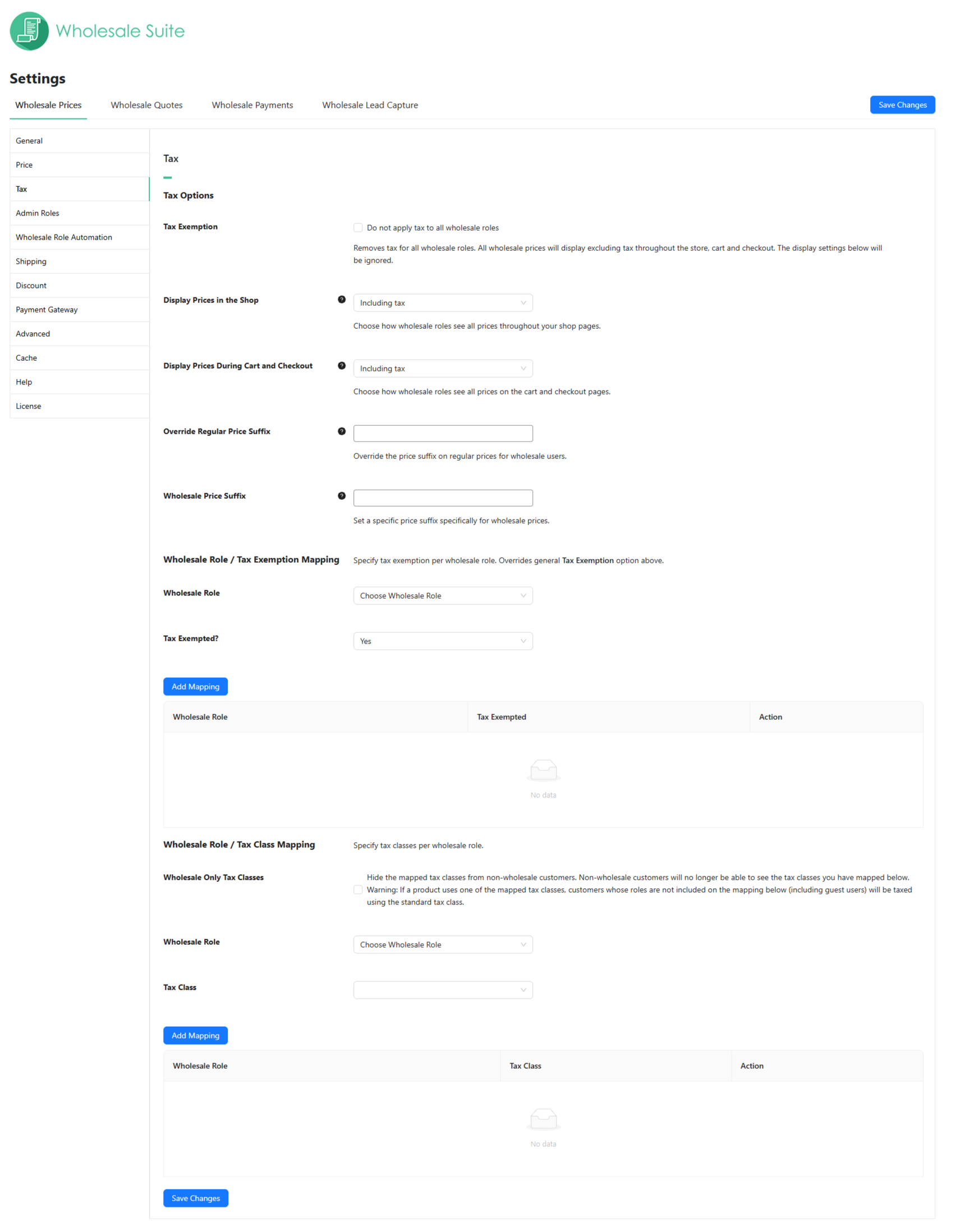
Price display is a separate decision. How prices appear in the shop, and again in the cart and at checkout, is controlled independently of whether you charge tax. Most wholesale stores display prices excluding tax throughout because that is how business buyers think, but that setting and the wholesale tax exemption setting are not the same.
Getting the display wrong produces the most common support question in a wholesale store: a buyer seeing one number on the product page and a different total at checkout.
There is a third thing wholesale tax exemption is not, and it comes up constantly: it is not a VAT number check. More on that below.
Wholesale Tax Exemption At The Role Level
The simplest setup exempts every wholesale user. Turn tax exemption on, and all customers in a wholesale role stop being charged tax. Retail customers are unaffected. For a store where every wholesale buyer is a qualified business, that is the whole configuration.
Most stores need something more selective, so you can map wholesale tax exemption to specific wholesale roles instead. That matters when your wholesale program has tiers that mean genuinely different things. A domestic trade tier and an export tier may need different tax treatment, and mapping exemption per role expresses that without creating a separate store.
Order Value Is Not A Wholesale Tax Exemption Trigger
It is tempting to think exemption should switch on once an order is big enough. Somebody buying twenty units behaves like a trade customer whether or not they have a trade account.
In Wholesale Suite, though, wholesale tax exemption is tied to the buyer, not to the size of the cart. You grant it by role or on an individual account, never by setting a subtotal above which tax simply disappears. The order-size controls that do exist- minimum order thresholds and cart subtotal discounts- shape pricing and order value rather than tax status.
That separation is worth keeping. A tax position should rest on qualifying the buyer, not on how much they happened to spend. If your exemption is a tax position rather than a discount, the paperwork matters more than the order value, and tying exemption to a subtotal would be exactly the wrong instinct.
Per-Customer Wholesale Tax Exemption
You can set an exemption for an individual customer, separately from their role. That is useful during onboarding, when one buyer in a tier has provided documentation and the others have not. Rather than exempting the whole tier prematurely, you exempt the account that has actually qualified.
What we’ve seen: Per-customer exemption gets granted on request rather than on evidence. A buyer asks, somebody obliges, and no record exists of why that account is exempt. Treat it as a compliance decision: set it when the paperwork arrives, not when the email does.
Our guide to tax exempting a wholesale customer in WooCommerce walks through the individual case step by step.
Where EU VAT Numbers Fit
Here is the honest version, because a lot of writing on this topic blurs it.
Wholesale Suite provides the tax exemption layer: wholesale tax exemption by role and per customer, plus control over how prices display with and without tax.
The VAT number field at checkout, and exemption driven by a customer entering a valid VAT number, come from a separate plugin. Wholesale Suite integrates with the EU VAT Number extension for WooCommerce, which collects and validates VAT numbers at checkout and can remove the charge for eligible EU businesses. Our own EU VAT number integration post covers what that combination gives you.
What Wholesale Suite does not do on its own is validate a VAT number against the EU’s VIES service. That check, run when the number is entered, lives in the dedicated VAT plugin. Wholesale Suite handles the wholesale pricing and the role-based exemption behavior around it.
So the practical stack for an EU B2B store is a dedicated VAT plugin for number capture and validation, plus Wholesale Suite for the wholesale pricing and the wholesale tax exemption behavior that sits alongside it. Being clear about what each piece does will save you an afternoon of looking for a setting that isn’t there.
Testing your wholesale tax exemption setup
Test as a customer rather than as an administrator, because administrators frequently see prices that ordinary buyers do not.
For each wholesale role, check four things: the product page, the cart, the checkout total, and the order confirmation email. Tax can be handled correctly in the first three and still appear on the fourth, and the buyer keeps the confirmation email.
Then check a retail customer and a logged-out visitor to confirm nothing leaked the other way. An exemption rule that accidentally applies to everyone is a worse problem than one that applies to nobody, because it is invisible until you reconcile.
Documentation You Should Be Collecting
Exemption is a position you may have to defend, so collect the evidence at the point of application. Depending on where you operate, that usually means a resale certificate, a VAT registration number, or business registration details. The key is that it arrives before the exemption is granted and that you can find it again.
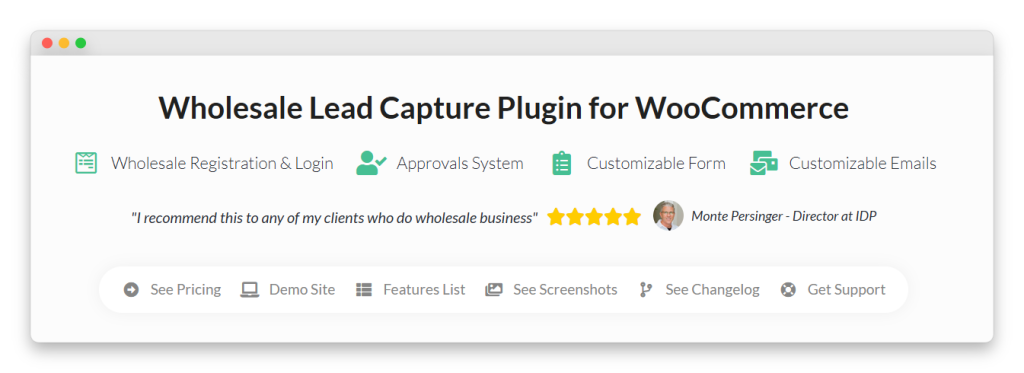
Wholesale Lead Capture includes file upload on the registration form for exactly this. Making documentation part of the application, rather than something chased afterward, is what turns wholesale tax exemption from a judgment call into a record.
This is general guidance, not tax advice. Rules vary by jurisdiction and change, so confirm your obligations with your accountant.
The scale is worth the care. According to the U.S. Census Bureau’s Annual Wholesale Trade Survey, durable-goods merchant wholesalers sold $1.58 trillion through e-commerce in 2022, up from $1.41 trillion in 2021, and Digital Commerce 360 reports total U.S. manufacturing and wholesale distribution sales of $15.12 trillion in 2025, drawn from U.S. Department of Commerce data.
Margins leave little room for getting tax wrong. NYU Stern’s margins-by-sector dataset puts the average net margin at 1.17% for food wholesalers and 6.05% for retail distributors. Tax charged in error is refunded from a thin base, and tax not charged when it should have been is worse.
Natural Wellness Products runs the full B2B workflow, including tax, and we covered their growth as a case study.
Setting Up Wholesale Tax Exemption Properly
The framing that helps is treating wholesale tax exemption as a record, not a setting. Every exempt account is a position you have taken, and the setting is simply where you record it. Separate exemption from price display, because the two cause different problems and constantly get confused. Decide whether you are exempting a whole role or a single account based on how you actually qualify buyers, and resist the urge to tie exemption to order size, since a tax position should rest on who the buyer is. Know which plugin does what before you go hunting for an EU VAT setting inside Wholesale Suite, and collect your documentation at the moment of application rather than chasing it later. Handled that way, wholesale tax exemption stops being a mysterious toggle and becomes part of a defensible process.
If you are setting up wholesale tax exemption in WooCommerce, Wholesale Prices Premium gives you exemption by role and per customer, alongside the pricing controls that go with them.
Here’s what we covered in this article:
- What wholesale tax exemption actually does
- Wholesale tax exemption at the role level
- Order value is not a wholesale tax exemption trigger
- Per-customer wholesale tax exemption
- Where EU VAT numbers fit
- Documentation you should be collecting
Frequently Asked Questions
Do all wholesale customers get tax exemption automatically?
Only if you enable it for all wholesale users. You can instead map wholesale tax exemption to specific wholesale roles, so some tiers are exempt and others are not.
Can I exempt just one customer?
Yes. Wholesale tax exemption can be set on an individual user’s profile, separately from whatever their role does. That is the right tool when one buyer has provided documentation and the rest of their tier has not.
Does this handle EU VAT?
Wholesale Suite handles the exemption behavior and the wholesale pricing around it. The VAT number field and VAT-number-driven exemption come from the EU VAT Number extension for WooCommerce, which Wholesale Suite integrates with. Validating a number against VIES is the extension’s job, not something Wholesale Suite does on its own.
What paperwork should I keep?
Whatever your jurisdiction requires to support an exemption, typically a resale certificate or a VAT registration number, collected before you grant the exemption. Your accountant is the authority on what is sufficient where you operate.
Why do my prices look different at checkout?
Almost always the price display settings rather than the exemption itself. Displaying prices excluding tax in the shop but including tax at checkout produces exactly that mismatch. Set both deliberately.