
Our drag-and-drop Order Form builder gives you many options on how to display product information on the order form.
For the “Order Form Table” section, we have the Product Meta element that lets you display the custom fields of your products on your WooCommerce site.
You can find the custom meta keys that you can use from the product editor page. Follow these steps to locate your meta keys and add them to the order form.
- From your WordPress Dashboard, go to All Products.
- Choose the product, then click Edit to open the product editor page.
- Scroll to the bottom of the page to see the list of custom meta keys.
- To create a new meta key, click Enter new, then enter the name and value of the meta key.
- In the order form builder, click the ⚙︎ icon of Product Meta, then open the Options tab and add the meta keys.
- Click Update to save your changes.
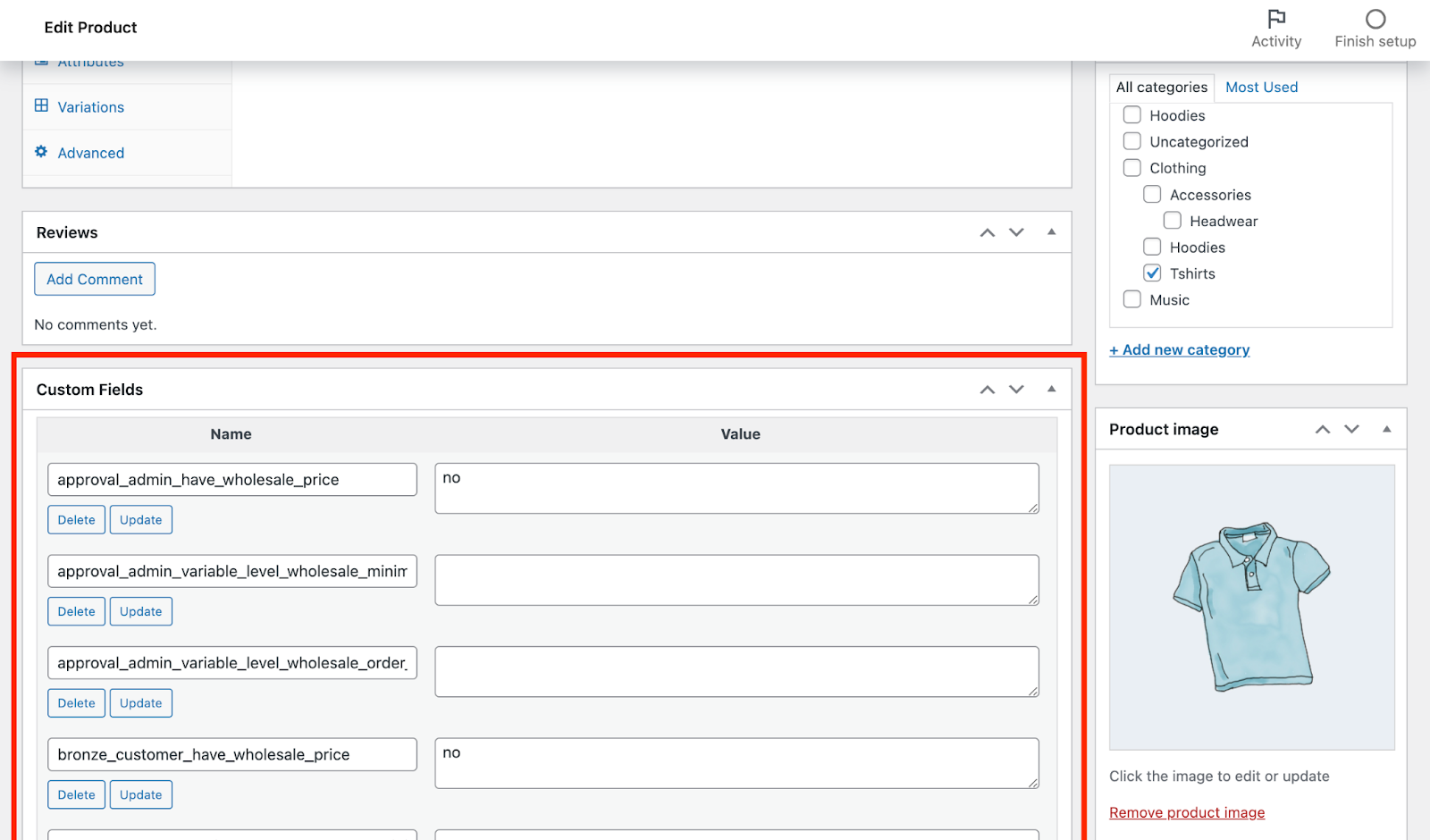
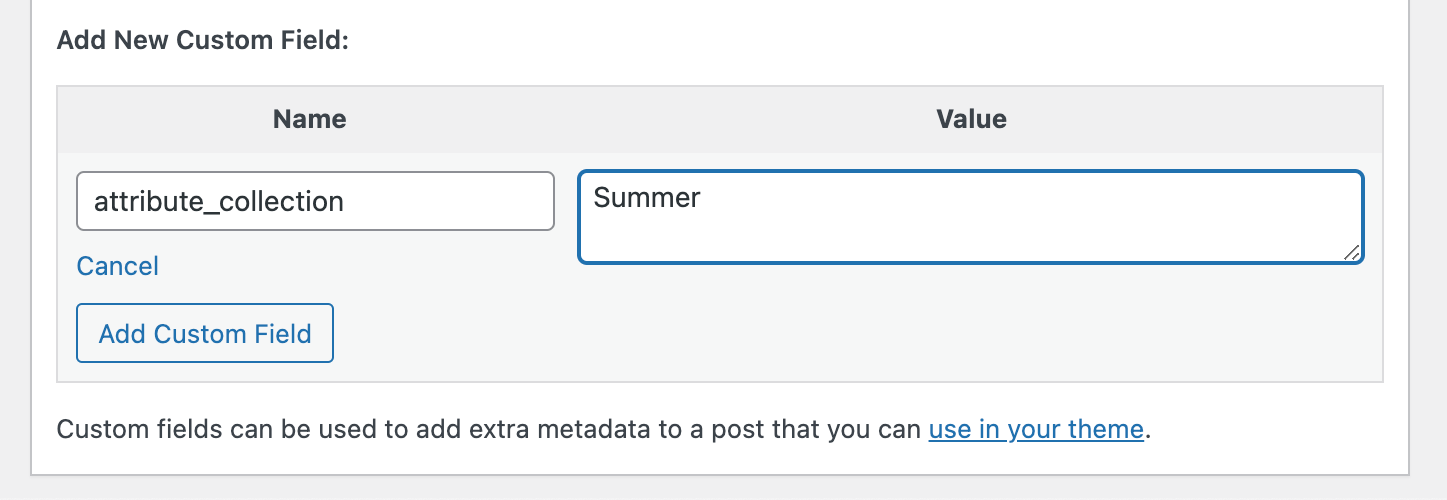
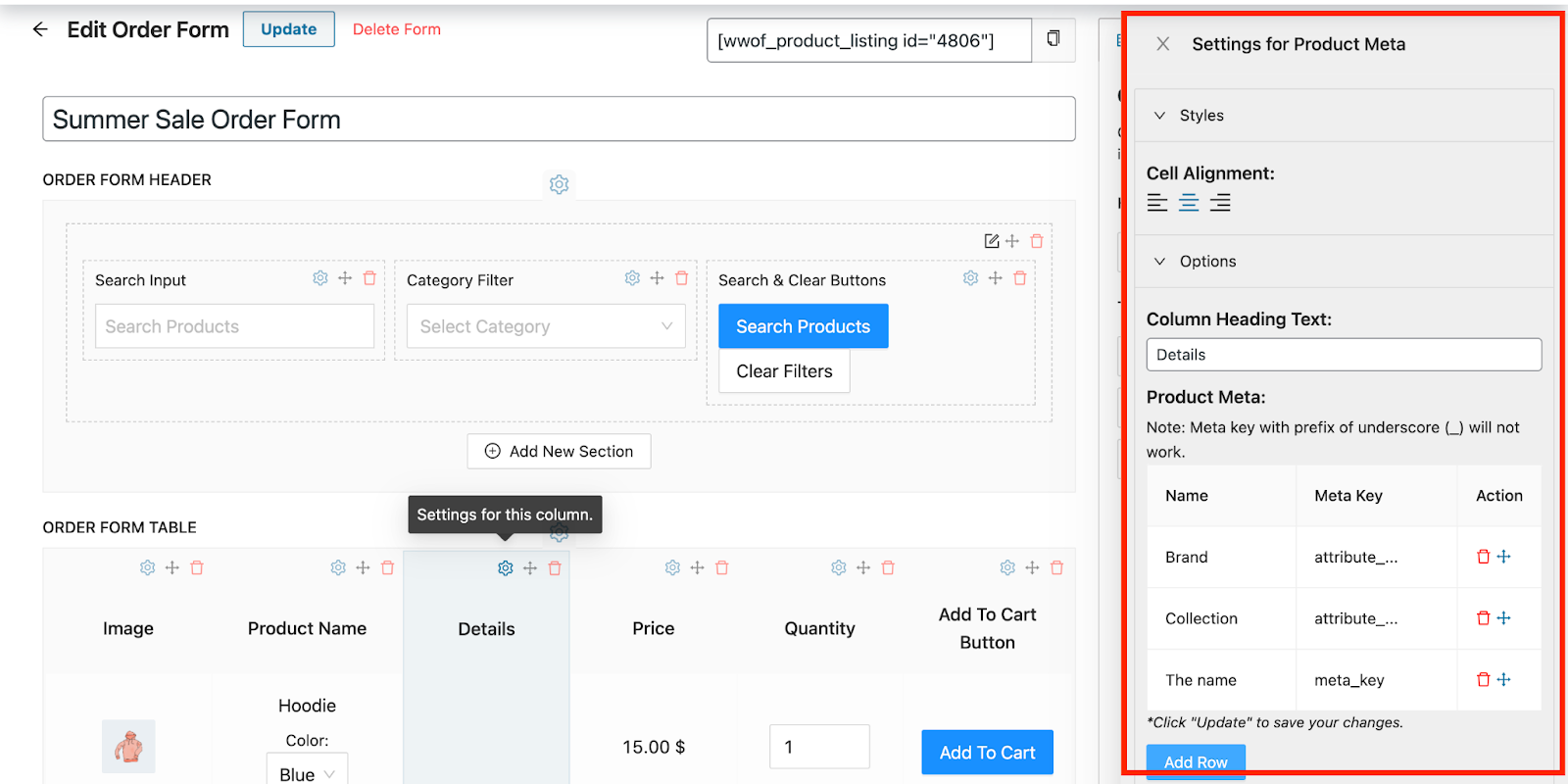
Please note that you can only use the meta keys listed on the product editor page above and you will not be able to use meta keys with an underscore (_) prefix.
Displaying GTIN, UPC, EAN, or ISBN
Requires WooCommerce 9.2 or later. Earlier versions don’t expose the Global Unique ID field that this column reads from.
WooCommerce 9.2 and later stores GTIN, UPC, EAN, and ISBN values in a dedicated Global Unique ID field on each product. The Wholesale Order Form builder includes a separate GTIN column element for this field, so you don’t need to set it up as a custom product meta entry.
- Open the order form in the builder and drag the GTIN element into the order form table.
- Click the gear icon on the GTIN column to open its settings, then open the Options tab.
- In Column Heading Text, change the header from the default “GTIN” if you’d prefer a more familiar label for your customers (for example, UPC or Product code).
- Click Update to save the form.
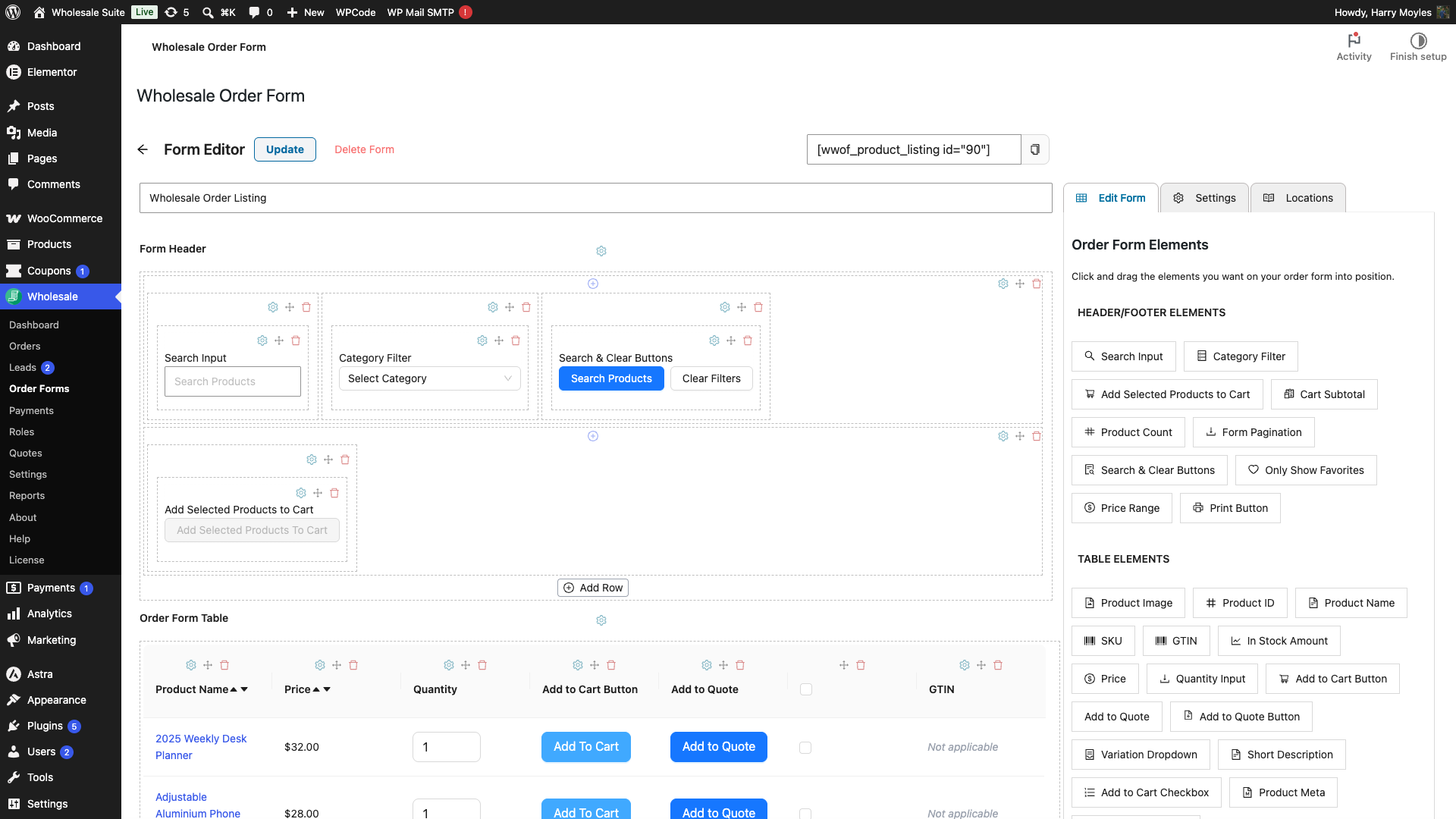
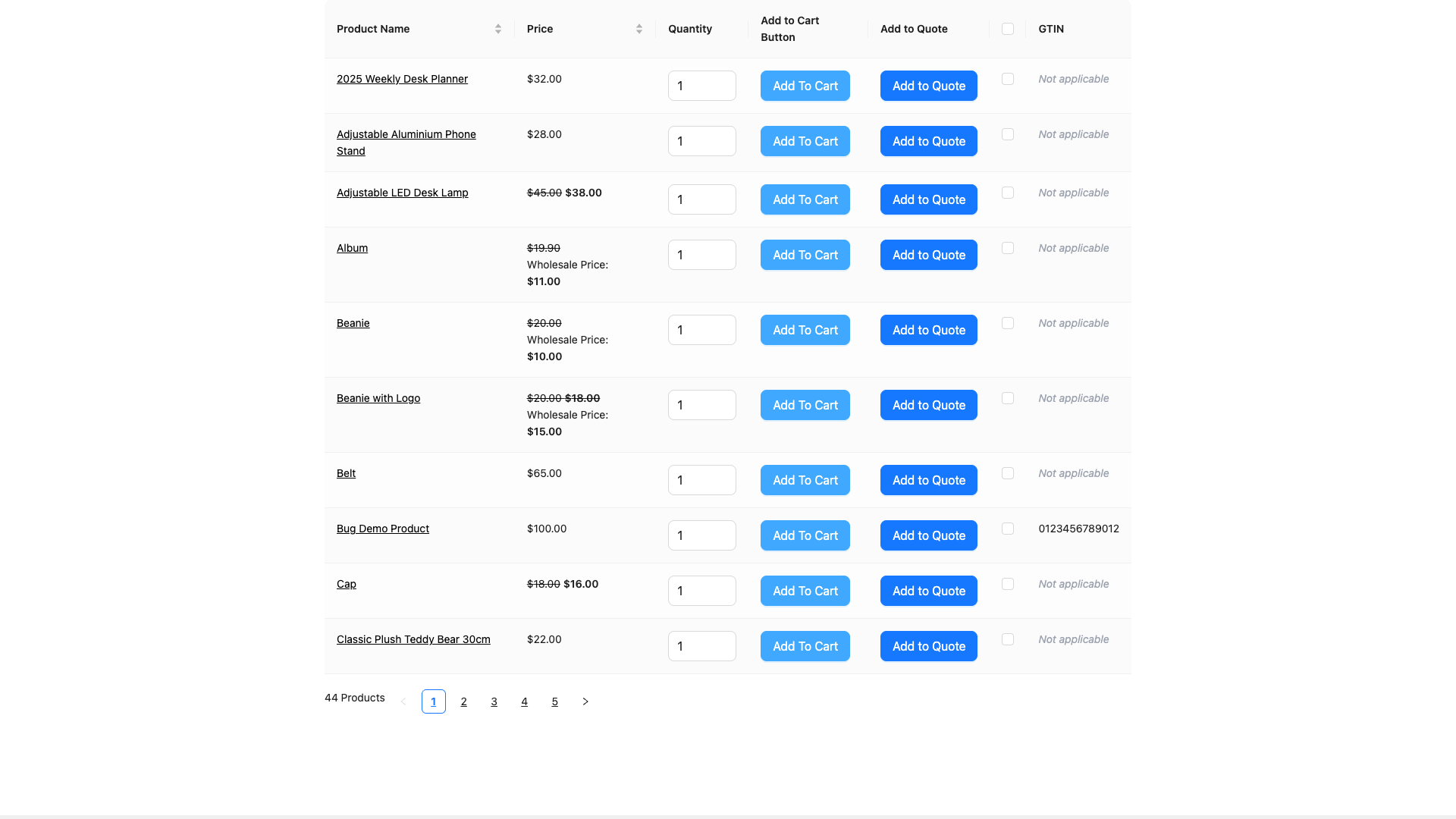
On the front end, customers see the value of the product’s Global Unique ID field in this column. Products without a value show Not applicable instead. The column is sortable if you’ve enabled the Sortable Column option in the settings.
Use the dedicated GTIN element rather than a generic Product Meta column for these identifiers. The Product Meta element reads custom meta keys you’ve added yourself; the GTIN element reads WooCommerce’s native _global_unique_id field, so values you enter in the product editor’s Inventory tab appear automatically in the order form.
Frequently Asked Questions
Can I use the Product Meta element for GTIN, UPC, EAN, or ISBN?
No. The Product Meta element reads custom meta keys you’ve added yourself and skips any key starting with an underscore. WooCommerce’s Global Unique ID is stored at _global_unique_id, so the Product Meta element can’t read it. Use the dedicated GTIN element instead.
How do I add product meta to the wholesale order form?
To do this, open the Order Form Table in the form builder and drag the Product Meta block into position. Click its settings icon, switch to the Options panel, and enter the meta keys to display. Click Update to save.
Does product meta work with variable products on the order form?
Generally, the Product Meta element pulls from any custom field set up in WooCommerce, so it works with all product types, including variable, as long as the key is visible on the editing screen.
Can I use meta keys with an underscore prefix on the order form?
No, keys beginning with an underscore are restricted and won’t appear in that column. Only those visible on the product editor page, without the prefix, are supported.
Can I show multiple meta keys in one Product Meta element?
Yes, you can include as many custom attributes as needed. Inside that same panel, enter each one at a time. All will appear together beneath the product row on the order form.
Why isn’t my custom product meta showing on the order form?
If a key isn’t appearing, confirm it shows up on the product editor page and doesn’t start with an underscore. Then verify you’ve entered the exact name in the element’s Options tab and clicked Update to apply the change.
Need Help?
If you have a question or run into any issues, we’re here to help.
- Premium users: Open a support ticket
- Free users: Visit our community forum