

Many businesses today still focus on one platform for their marketing campaigns. Some stay only on Facebook. Others rely only on email. However, here is the thing: customers browse across multiple websites online before making a purchase. They read posts, check emails, and view ads on various platforms. If a brand speaks in only one place, its message becomes easy to miss. This is why a cross-channel marketing strategy is now so important. It connects all those platforms so that the customer sees a single, clear message, regardless of their location.
In this article, you will get a complete guide on how to create a cross-channel marketing strategy that works. We will look at why it matters and how to plan a successful cross-channel marketing campaign step by step.
Ready? Let’s begin!
What Is A Cross-Channel Marketing Strategy?
A cross-channel marketing strategy is a plan that connects all the ways a brand talks to its audience. It ensures that email campaigns, social media posts, search ads, and even text messages work together, rather than acting as separate projects.
Think of it like talking to a friend. If you text them one thing, email them something different, and then post another message on Facebook, the story gets confusing. In marketing, that confusion makes customers lose interest. A cross-channel marketing strategy stops that from happening by keeping every message connected.
Cross-channel vs. multi-channel
Cross-channel is different from a multi-channel approach. In multi-channel marketing, a brand may use many platforms, but each one runs its own campaign. There is no real connection between them. An omnichannel approach is even bigger. It includes not only online marketing but also in-store experiences, customer support, and other offline channels. Cross-channel marketing sits in the middle. It focuses on linking online channels so that they tell a unified story together.
For example, a WooCommerce store using Wholesale Suite can run ads for wholesale discounts on Facebook, send order reminders through email, and share product tips on Instagram. If all these messages are connected under one cross-channel marketing strategy, the customer gets a clear story at every step. This enhances the entire marketing campaign, providing buyers with a smoother experience.
Businesses in 2025 need this approach to stay competitive. With numerous platforms competing for attention, a successful cross-channel marketing plan enables brands to reach the right customer segments with the right message at the right time.
Core Components Of A Successful Strategy
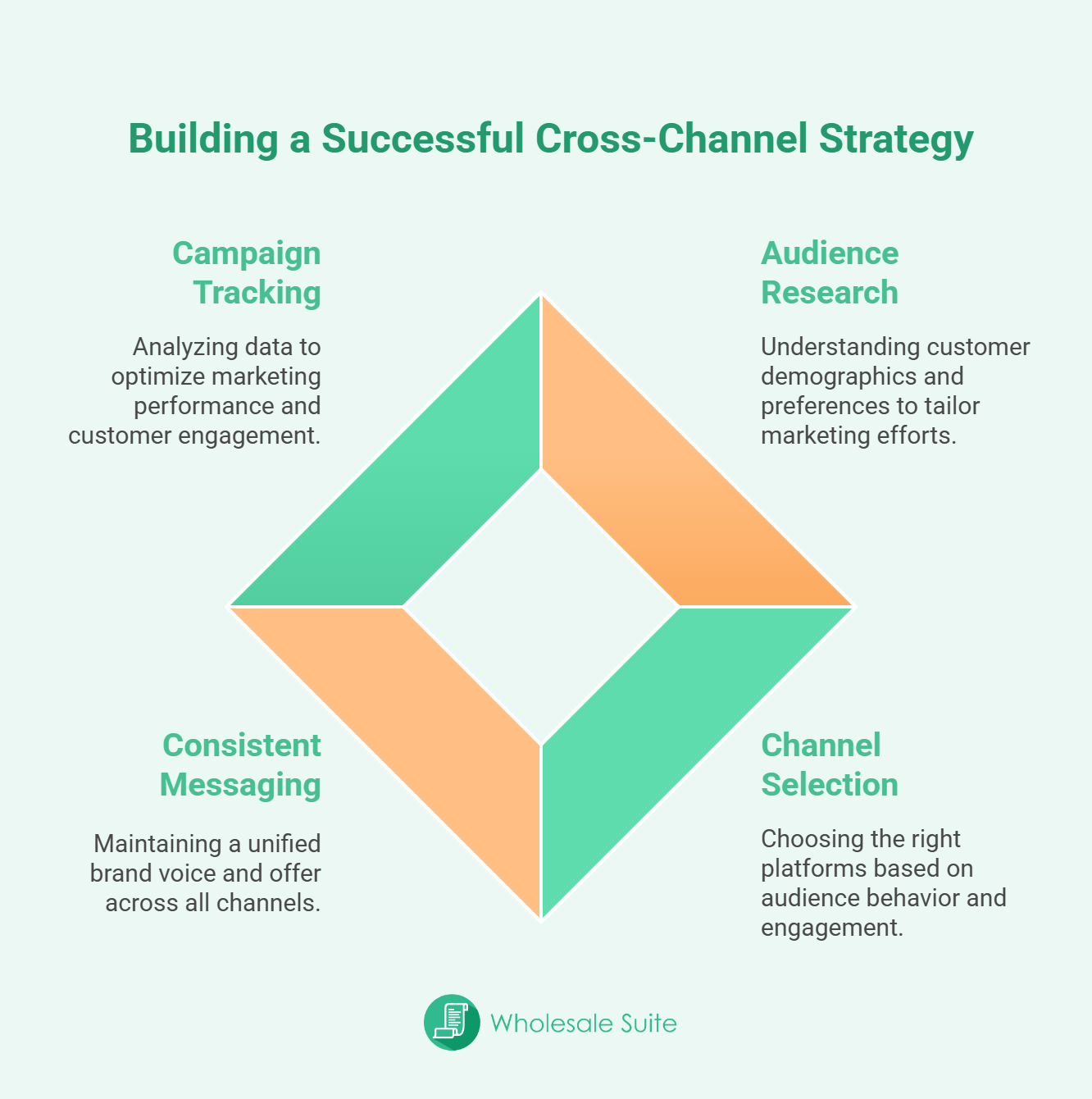
A cross-channel marketing strategy works best when it has a clear structure. Without one, messages can feel random, and customers may lose interest quickly. Below are the core components that every business should focus on when building a successful cross-channel marketing plan.
Audience research and segmentation
The first step in any cross-channel marketing strategy is knowing the audience. A business needs to understand who its customers are, what they care about, and how they prefer to communicate. This is where buyer personas come in. A buyer persona is a simplified profile that outlines the age, interests, and purchasing habits of a target customer group.
By creating these profiles, a business can design a marketing campaign that speaks directly to each group, rather than using the same message for everyone.
Choosing the right channels
Not all platforms work the same way. A good cross-channel marketing strategy chooses the right mix of channels based on where the audience spends their time.
This step is crucial because using the wrong channels can result in wasted time and money. For example, if most wholesale buyers read emails but rarely use Instagram, then running ads only on Instagram will not effectively reach them. On the other hand, if retail shoppers like short videos on social media, then email campaigns alone may not get their attention.
Consistent messaging across all platforms
This does not mean using the exact same words everywhere. Instead, it means maintaining a consistent tone, offer, and key details so the audience always knows what the brand stands for.
Tracking and analyzing campaigns
Ultimately, a successful cross-channel marketing strategy leverages data to identify what works and what does not. Running a marketing campaign without looking at the numbers is like guessing in the dark. Data reveals what messages people like, which channels generate the most sales, and where customers tend to lose interest.
Let’s say a WooCommerce store runs three campaigns at the same time: a Facebook ad for retail customers, an email campaign for wholesale buyers, and a blog post for search traffic. Suppose the Facebook ad generates clicks but no orders, the email campaign receives fewer clicks but more sales, and the blog post consistently brings steady traffic over time. In that case, the store can identify which channel works best for each customer segment.
Over time, this process turns every campaign into a learning experience. Each round of tracking and adjusting strengthens and makes the cross-channel marketing plan more effective.
How To Build A Cross-Channel Marketing Strategy
Below are the steps any business can follow to create a successful cross-channel marketing plan for retail and wholesale customers.
Step 1: Define campaign goals and KPIs
Every good cross-channel marketing strategy begins with clear goals. Goals can be simple at first. A business might want to increase online sales, get more email sign-ups, or encourage more people to visit its store website. Others may want to raise awareness for a new product or enhance customer engagement by initiating conversations on social media. The point is to pick a goal that matters most at that moment instead of trying to do everything at once.
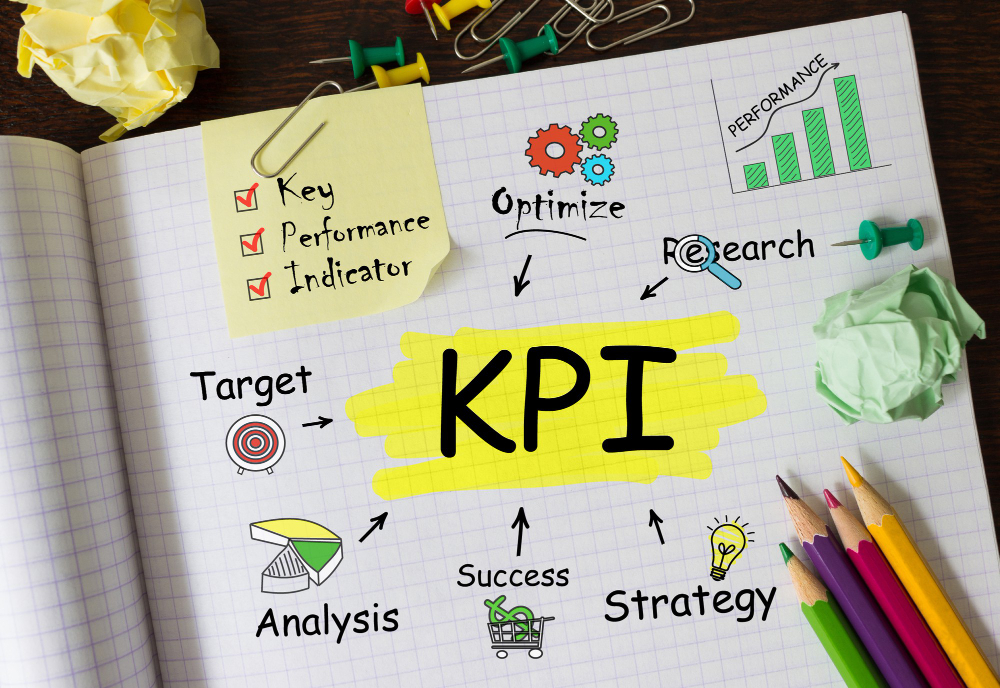
Along with goals, there should be Key Performance Indicators (KPIs). These are numbers that show whether the goal is being met. For example, if the goal is to increase sales, KPIs can include total orders, average order value, or repeat purchases.
Step 2: Map the customer journey
After setting goals, the next step is to map out the customer journey.
A customer journey is the path people take from first hearing about a brand to making a purchase and returning. Mapping the journey means writing down each touchpoint in order. Touchpoints are places where people see or interact with the brand.
Four simple stages to map
- Awareness: They first hear about the offer.
- Consideration: Compare options and ask questions.
- Purchase: They buy.
- After-Purchase: Get support, updates, and reminders.
Retail example:
- A shopper watches a short Instagram video about a new skin care kit.
- Later, a blog post explains how to use the kit.
- An email shares a limited-time bundle.
- A retargeting ad reminds them to finish checkout.
- A follow-up email thanks them and asks for a quick review.
Wholesale example:
- A buyer sees a LinkedIn post about bulk pricing.
- A sales email shares a price list and a MOQ reminder.
- The buyer logs in to a wholesale account and adds items to the cart.
- A cart reminder brings them back the next day.
- An order update confirms shipping and shares a reorder link.
DIY for beginners: How to map it in 15 minutes
- Draw four boxes on paper: Awareness, Consideration, Purchase, and After-Purchase.
- Under each box, list the channels you use. Add the exact message or offer people see there.
- Note the buyer personas beside each box. For example, “Retail deal hunters” or “Wholesale repeat buyers.”
- Mark any gaps. If Awareness uses Facebook but Consideration has no email, write “Add email with FAQs.”
- Add small goals under each stage. For example, Awareness goal = clicks. Purchase goal = orders.
When a business understands this journey, it can utilize cross-channel marketing to ensure every step works together.
Step 3: Align messaging across channels
Every channel should tell the same story. The words can be adjusted to fit the platform, yet the core message, price, and next step should remain consistent. Here’s what you can do:
a. Build a one-line message first
Write a single, concise line that every channel will support. Example: “New summer set, free shipping this week.”
b. Then shape it per channel:
- Facebook Ad: Quick line and a clear image of the set.
- Email: Short story about the set, who it is for, and a button to shop.
- Instagram: Photo or short video with a caption that repeats the same offer.
- Website Banner: Headline with the same promise and a clear link.
c. Keep the offer details the same:
- Product name
- Same price and dates
- Same link to the right page
💡 My quick method: When I plan a marketing campaign, I write the main line at the top of a doc. Then I create a short version for ads, a fuller version for email, and a headline for the site. I read them out loud. If they sound like three different ideas, I refine them until they form a cohesive plan.
Step 4: Use automation tools for campaigns
Manually sending every message is hard. Automation sends the right note at the right time based on a trigger.
a. Common triggers you can use
- New signup: Send a welcome series.
- Product view: A follow-up with FAQs.
- Cart started: Send a gentle reminder.
- Order placed: Send receipt, care tips, and next steps.
- Time since last order: A reorder nudge at 30 or 60 days.
b. Wholesale flows
- Price update alert: Email wholesale buyers when a price or pack size changes.
- MOQ reminder: If a cart is below MOQ, send a tip on how to meet it.
- Reorder schedule: If a buyer often orders every 45 days, send a friendly reminder at day 40.
- New line launch: Send a short preview and a link to a pre-order form.
c. Retail flows
- Welcome series: 2–3 emails with value tips and a light offer.
- Browse reminder: If someone looked at a product page and left, send a short note with answers to common questions.
- Post-purchase care: Share how to use the item and a quick way to reach support.
- Review request: Ask for a simple star rating a few days after delivery.
d. Set it up safely
- Start with one or two flows.
- Send yourself test messages.
- Check links, prices, and dates before you go live.
When all tools work together under a cross-channel marketing strategy, the business saves time while maintaining a consistent message.
Step 5: Launch, test, and adjust the campaign
The final step is to launch the campaign, then observe the results. Tracking results shows which channels drive sales, which messages people like, and which ones require adjustments. Here’s how you can do it:
Pick a start date, a budget, and the channels you will use. Write down your starting numbers so you can compare later—examples: site visits per week, orders per week, email open rate, ad click rate.
a. What to test first
- Subject lines: Short vs. question.
- Ad images: Product-only vs. product-in-use.
- Buttons: “Shop Now” vs. “See Details.”
- Offer framing: “New set” vs. “Starter set.”
b. How long to wait
Give each test a fair run. A week is often enough for small stores. Bigger stores may need more time. Do not change three things at once. Change one thing at a time to determine what caused the result.
c. Read the signals
- High clicks, low orders: The page may be confusing to users. Check the copy, photos, and price.
- Good email opens, low clicks: The subject line was effective, but the body content was not. Shorten the message and add one clear button.
- Ad fatigue: If people see the same ad repeatedly and stop clicking, consider swapping the image or trying a fresh approach.
- Mismatch across channels: If comments ask basic questions, include those answers in the email and on the page.
If one channel brings few orders, the business can test a new message there. If email open rates drop, it can try a different subject line. Testing and adjusting each campaign turns it into a learning process.
Common Mistakes To Avoid
A well-executed cross-channel marketing strategy can yield strong results. However, some mistakes prevent businesses from realizing the full benefits of cross-channel marketing. Here are typical problems to avoid so campaigns stay clear and effective.
Running separate campaigns for each channel
One mistake is treating every channel like its own world. This breaks the connection and makes it hard for customers to follow the story.
How to avoid it:
- Write one main campaign idea first.
- Adapt it for each platform instead of creating separate offers.
- Review all messages before launch to check for consistency.
Ignoring data
Another mistake is not utilizing the available data. If businesses ignore this information, they miss chances to send the right message at the right time.
For example, if the data indicates that many buyers reorder every 45 days, a simple email reminder sent on day 40 can lead to repeat sales. Without that insight, the business might send random messages that do not fit the buyer’s needs.
How to avoid it:
- Check order history before planning campaigns.
- Segment wholesale and retail customers so each group gets relevant messages.
- Use data to decide when to send reminders, new offers, or updates.
Sending inconsistent brand messages
One tone on Facebook, a totally different one in emails, and yet another on the website make the brand feel unreliable.
How to avoid it:
- Maintain a consistent tone, color palette, and key phrases across all platforms.
- Create a single document with brand guidelines so that every team member remains consistent.
- Maintain consistent product names, prices, and offers across all channels.
Skipping the testing phase
Some businesses launch a cross-channel marketing strategy but never test or adjust it. They continue to use the same messages, even when the results are weak. This wastes money and limits growth.
How to avoid it:
- Review results weekly or monthly.
- Test small changes, such as new subject lines or images.
- Keep what works and replace what does not.
Trying to do too much at once
Ultimately, some businesses attempt to be everywhere at once. They launch on five platforms with ten different messages and burn out fast. A successful cross-channel marketing plan works better when it starts small and grows slowly.
How to avoid it:
- Start with one or two channels that best fit your audience.
- Add new channels only after the first ones run smoothly.
- Grow based on data, not pressure to be everywhere.
Cross-Channel Marketing Tools To Consider
A cross-channel marketing strategy works best when supported by the right tools. These tools make it easier to connect platforms, track results, and send messages on time. Here are some options that can help both retail and wholesale businesses create successful cross-channel marketing campaigns:
Wholesale Suite for wholesale store management
For WooCommerce stores, Wholesale Suite is one of the most valuable tools to connect wholesale sale efforts. It helps manage wholesale prices, minimum order quantities, and buyer roles all in one place.
For example, if a business sends an email campaign about a new wholesale discount, Wholesale Suite ensures that only approved buyers see the wholesale prices when they visit the store. It also allows businesses to segment their wholesale and retail customers, ensuring each group receives the right products and discounts.
This enables a seamless cross-channel marketing strategy, where wholesale buyers receive updates on bulk pricing and retail customers see offers for single-item purchases.
You may also read about: How To Craft Compelling WooCommerce Emails For Wholesale Customers.
CRM platforms for customer tracking
A Customer Relationship Management (CRM) platform stores customer details in one place. It tracks email interactions, purchase history, and support conversations.
For instance, if a wholesale buyer opens every product update email but rarely clicks on ads, the CRM indicates that email is the most effective way to reach them. On the other hand, if retail shoppers engage more with social media posts, the business can adjust its cross-channel marketing plan to focus on those platforms for that group.
Popular CRM options include HubSpot, Zoho CRM, and ActiveCampaign. These tools help businesses create more effective buyer personas and develop targeted marketing campaigns based on actual customer data.
You may also read: Best WooCommerce CRM Plugins And Services (Compared).
Email marketing tools for campaign automation
Email remains a key part of many cross-channel marketing strategies. Platforms like Mailchimp, Drip, Klaviyo, or ConvertKit allow businesses to send scheduled emails, create automated follow-ups, and segment customers based on behavior.
This keeps the marketing campaign running smoothly without requiring manual email sending.
Social media management tools
Managing multiple platforms can be hard without the right tool. Social media management platforms, such as Buffer, Hootsuite, or Later, enable businesses to schedule posts, monitor engagement, and track comments in one place.
For a cross-channel marketing strategy, this means that Facebook ads, Instagram posts, and LinkedIn updates can all follow the same flow and maintain a consistent brand voice.
Analytics and reporting tools
Finally, analytics tools show what works and what does not. Google Analytics, Facebook Insights, and built-in email reports provide insight into how people interact with campaigns across various platforms.
For instance, if the analytics indicate that Instagram generates a high number of clicks but few sales, the business might adjust the call-to-action or test new images. If email campaigns bring strong sales results, they can expand those efforts for future campaigns.
Takeaways
When I first learned about cross-channel marketing, I used to think it was only for big brands with huge budgets. But after years of helping businesses plan these strategies, I realized how even the simplest steps could make a significant difference.
Let’s do a quick recap on what we discussed in this article:
- What is cross-channel marketing strategy
- Core components
- How to build a cross-channel marketing strategy
- Mistakes to avoid
- Cross-channel marketing tools
The best part is seeing businesses grow their confidence as they learn. For starters, many feel unsure about mapping the customer journey, setting goals, or testing campaigns. But once they see results, they become excited about trying new ideas, such as more advanced tools or even a more precise automation flow. This is what makes a successful cross-channel marketing plan work, and eventually, more effective.