

Email is one of the strongest tools a business can use to reach and connect with other businesses. While social media and ads are popular, emails remain personal, direct, and easy to track. Many business owners still rely on B2B email marketing campaigns because they can reach decision-makers right in their inbox. When used with clear planning, email marketing can help brands stay remembered, trusted, and chosen repeatedly. In this article, we will teach you how to build a B2B email marketing strategy that helps you connect better with your leads and partners. You will also learn how to connect and personalize offers that grow long-term loyalty.
Without further ado, let’s begin!
What Is A B2B Email Marketing Strategy?
A B2B email marketing strategy is a clear plan that guides how a business communicates with other businesses through email. It helps companies send messages that build trust, share helpful information, and create opportunities for long-term growth. The main goal is to build a professional relationship with clients or partners rather than chasing one-time sales.
This strategy usually starts with understanding your audience. In B2B, your readers are not random shoppers. They are company owners, managers, or buyers who make careful choices. When you use the right marketing strategies, you can speak directly to their needs. For example, instead of saying “Buy now,” a better email would say “Here’s how our pricing tool helps you save time managing bulk orders.” Messages like this show care and problem-solving — two things B2B clients value most.
Comparing B2C and B2B email marketing strategy
Compared to B2C marketing, a B2B email marketing strategy is less about emotion and more about logic and value. A consumer might buy a product because it looks nice or is on sale. But a business client needs to see how your product fits their process, budget, or customer demand. That is why B2B emails often include data, guides, or case studies. These help readers make smart decisions.
B2B also means fewer but stronger relationships. You might not have an extensive email list, but every contact is more meaningful. Each email you send is part of a long-term conversation. You are not trying to get instant clicks. Instead, you are showing that you are a partner who listens, shares solutions, and delivers on promises.
It’s not just about sending updates; it’s about sending the right updates. For example, when a new product arrives, you might send early access to loyal wholesale buyers. When a customer has not ordered in a while, you can send a short note reminding them of their past purchases. These small, thoughtful touches create trust that grows over time.
Key Elements Of An Effective B2B Email Marketing Strategy
Every B2B email marketing strategy has a few key parts that make it work. These parts help you send better messages, grow your email list, and improve email deliverability. The goal is to make sure every message reaches the right person at the right time. When you plan each part carefully, you can build trust and keep your business relationships strong.
Segmentation builds focus
Segmentation means dividing your email list into smaller groups based on shared characteristics such as company size, industry, or role. When you do this, you can send messages that better fit each group. For example, a message for small retailers should sound different from one sent to big distributors.
This is one of the most helpful marketing strategies because it helps you avoid sending generic messages. It also improves your email deliverability, since readers are more likely to open and engage when the content feels made for them. Sending focused emails shows that you understand your audience, and that is how relationships start to grow.
Personalization drives stronger connections
Personalization means making each message feel like it was written for one person. You can include their name, their company name, or even refer to their last order. For B2B, this makes a big difference. When people see that you know their needs, they are more open to reading your next message.
Using personalization in your B2B email marketing strategy also makes your email campaigns feel real and trustworthy. For instance, you might send an email that says, “Hi Sarah, we noticed your last order was for bulk skincare bottles. Here’s our new packaging option.” That small effort shows care and helps maintain long-term connections.
Automation saves time and improves timing
Automation is another important part of a B2B email marketing strategy. It helps you send emails automatically based on specific actions. For example, when someone signs up for your newsletter, they can get a welcome email right away. If they add items to their cart but do not check out, they can receive a gentle reminder later.
Automation keeps your email campaigns running even when you are busy. It also improves your email deliverability by sending messages at the right time. This way, your partners or clients receive updates when they are most active, increasing their likelihood to engage.
Analytics helps improve performance
Analytics is about studying what happens after you send your emails. You can look at open rates, click-through rates, and conversions. These numbers show which parts of your message work best. If your open rate is low, you can change your subject line. If few people click, you can adjust your CTA or layout.
Regularly reviewing your analytics is part of marketing best practices. It helps you learn from your data rather than guess. When you keep improving your emails, you show professionalism and care for your readers’ experience.
Proven B2B Email Marketing Tactics That Work
Once you understand the core parts of your B2B email marketing strategy, it’s time to use it in real email campaigns. These proven tactics help you stay connected with your audience, maintain high email deliverability, and follow marketing best practices. When used together, they make every message more valuable and personal.
1. Onboarding and welcome emails
When a new contact joins your email list, the first message they get matters a lot. A simple welcome email can set the tone for your entire relationship. It should thank them for joining and give them something valuable right away, such as product tips or quick links to your catalog.
Onboarding emails help new leads learn about your process and build trust early. For example, a wholesaler might send a short message that says, “Welcome to our network! Here’s your bulk pricing guide to get started.” That short email already adds value and shows care.
You may also read: How To Enhance B2B Onboarding: 4 Post-Registration Strategies.
2. Lead-nurturing email campaigns
An email campaign is a series of emails that share information step by step. It can include tutorials, product guides, or simple reminders. The goal is to help your reader learn something valuable each time.
These email campaigns are some of the strongest marketing strategies for long-term engagement. They give you space to explain how your service fits a partner’s needs. Over time, these messages build confidence and keep your brand top of mind without being pushy.
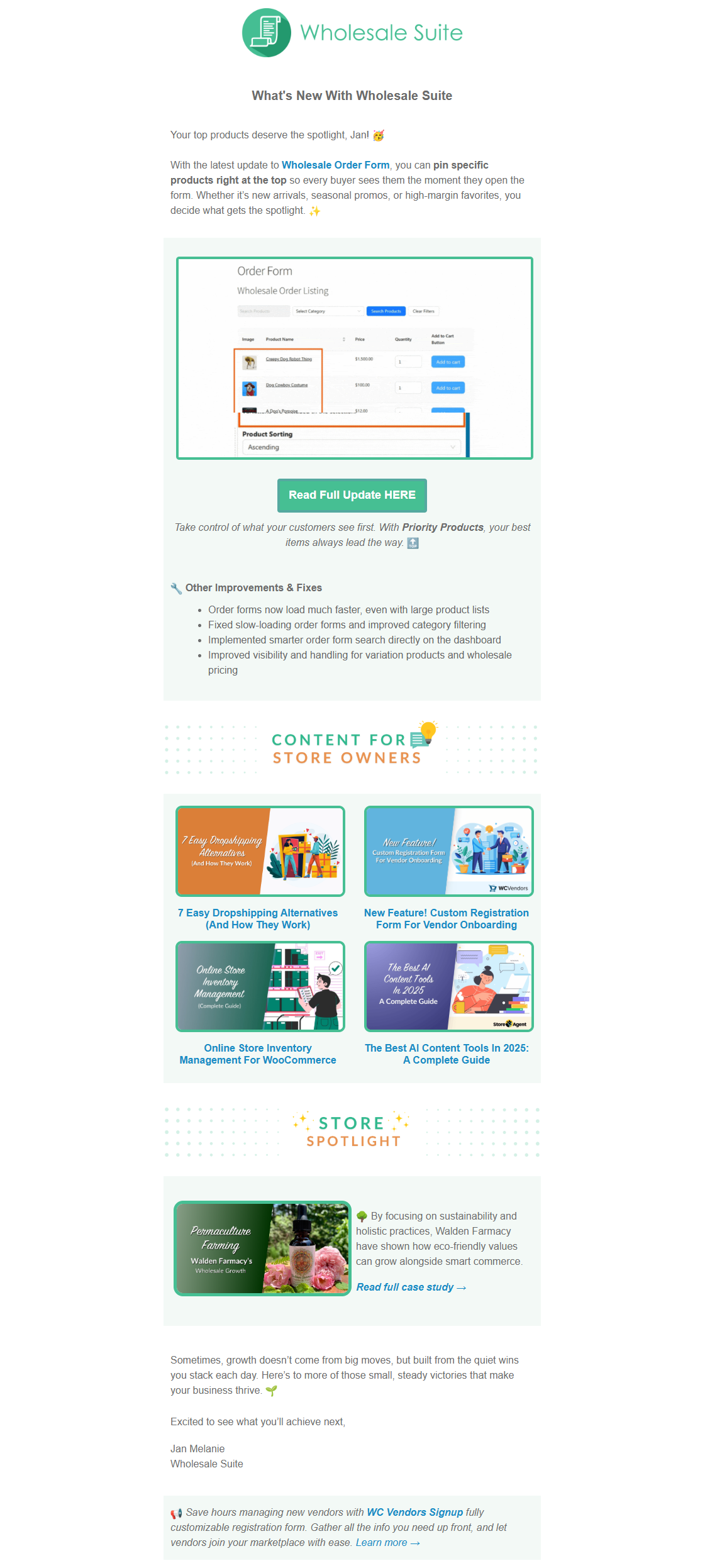
You can also read about “Simple Wholesale Email Templates You Can Send Today For B2B.”

3. Re-engagement and win-back emails
Sometimes, leads stop opening your messages. When that happens, send a short note to reconnect. Remind them what they liked about your brand or show what’s new in your store.
Using this approach inside your B2B email marketing strategy helps bring quiet leads back into the conversation. A simple subject line, such as “We saved your preferred items” or “See what’s restocked this week” can restart interest. Re-engagement emails also improve email deliverability because active readers help maintain a healthy sender reputation.
4. Educational newsletters
Newsletters help you share updates and teach your readers something useful. In B2B, they work best when you focus on value instead of pure promotion. You can include short how-to tips, case studies, or simple advice that fits your marketing best practices.
A newsletter should read like a friendly message from someone who knows the business well. For example, a supplier might share “3 quick ways to save time on large orders” or “Common mistakes to avoid in shipping.” Helpful information keeps readers opening your future emails.
5. Partnership milestone emails
When your client reaches a year with you, finishes a big order, or refers a new partner, celebrate it. A short thank-you note or a small reward builds loyalty. These milestone emails make people feel valued and remind them that they are part of your success.
Including appreciation in your B2B email marketing strategy also keeps relationships warm during slow seasons. A message like “Thank you for being with us for another great year” makes a big impact, even without a sale attached.
How Wholesale Lead Capture Can Help Apply These Strategies
Wholesale Suite helps store owners put their B2B email marketing strategy into practice. It connects your WooCommerce store with tools that make communication easy, organized, and personal.
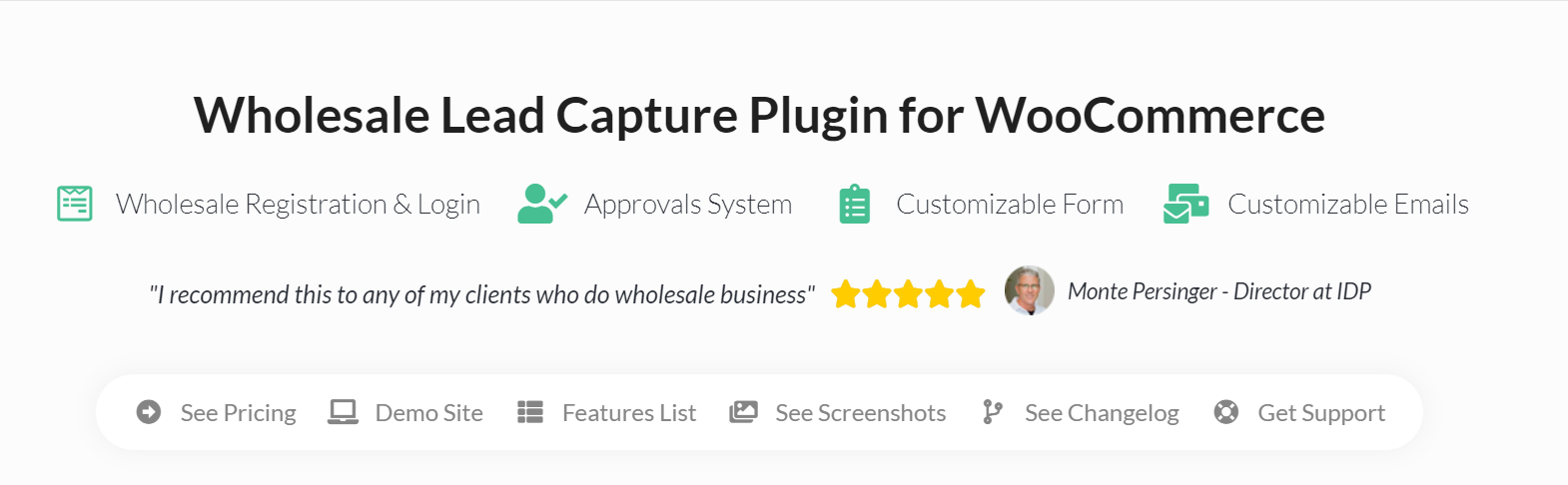
With Wholesale Lead Capture, you can collect new wholesale sign-ups right from your website. Every new lead goes straight to your email list, ready for onboarding or follow-up email campaigns. You can welcome new buyers, approve accounts, and even remind them to complete registration — all automatically.
By using Wholesale Suite’s full set of products — including Wholesale Prices Premium, Wholesale Order Form, and Wholesale Payments — your B2B email marketing strategy becomes stronger. All products work together to keep your store organized and your relationships growing long-term.
Takeaways
Building long-term business relationships takes time, care, and consistency. When you use a clear B2B email marketing strategy, you show your partners that you value connection as much as sales.
Let’s do a quick recap on what we discussed in this article:
- What is a B2B email marketing strategy
- Key elements
- Email marketing tactics
- How Wholesale Lead Capture can help you
Here are a few final reminders I want you to keep in mind:
First, focus on communication that helps, not just sells. Every email should have a purpose, whether it’s a thank-you note, an order update, or a simple tip. These small actions show respect and reliability. When customers feel seen and supported, they remember your brand.
Second, track how your emails perform. Use your reports to check what gets opened, clicked, or ignored. These results help you learn what works best for your audience. Over time, this becomes one of your strongest marketing strategies because it enables you to keep improving while staying honest and consistent.
Lastly, treat every buyer like a partner. Send appreciation messages after big orders, remind them when stock is low, and share updates they can actually use. These steps follow marketing best practices and maintain healthy relationships.
When you follow these tips, your B2B email marketing strategy turns into a system that builds real partnerships — the kind that make your business stable and respected for years.
Do you have any questions? Let me know in the comments.
Frequently Asked Questions
How can Wholesale Suite assist in implementing a successful B2B email marketing strategy?
Wholesale Suite helps store owners facilitate B2B email marketing by connecting WooCommerce stores with tools like Wholesale Lead Capture, which automates lead collection, onboarding, and follow-up, thereby supporting long-term relationship building.
Which proven tactics can enhance my B2B email campaigns?
Effective tactics include onboarding and welcome emails, lead nurturing series, re-engagement and win-back messages, educational newsletters, and milestone appreciation emails to maintain and strengthen business relationships.
What are the essential elements of an effective B2B email marketing strategy?
Key elements include segmentation to target specific groups, personalization to tailor messages, automation to send timely emails, and analytics to monitor and improve campaign performance.
How does B2B email marketing differ from B2C?
B2B email marketing emphasizes logic and value, often involving data, guides, and case studies to meet the specific needs of business clients, whereas B2C marketing tends to focus more on emotional appeals and quick sales.
What defines a B2B email marketing strategy?
A B2B email marketing strategy is a comprehensive plan that guides how a business communicates with other companies via email, focusing on building trust, sharing useful information, and fostering long-term professional relationships rather than merely chasing one-time sales.