

If you are deciding between WooCommerce Wholesale vs Shopify B2B, the real question is not which platform is easier in general. The real question is which one gives you the wholesale tools you need at a cost and level of flexibility that fits your business.
In this article, we will discuss everything you need to know about WooCommerce Wholesale and Shopify B2B. Let’s proceed!
Quick Platform Overview For B2B
When comparing WooCommerce Wholesale vs Shopify B2B, the biggest difference is flexibility versus built-in structure.
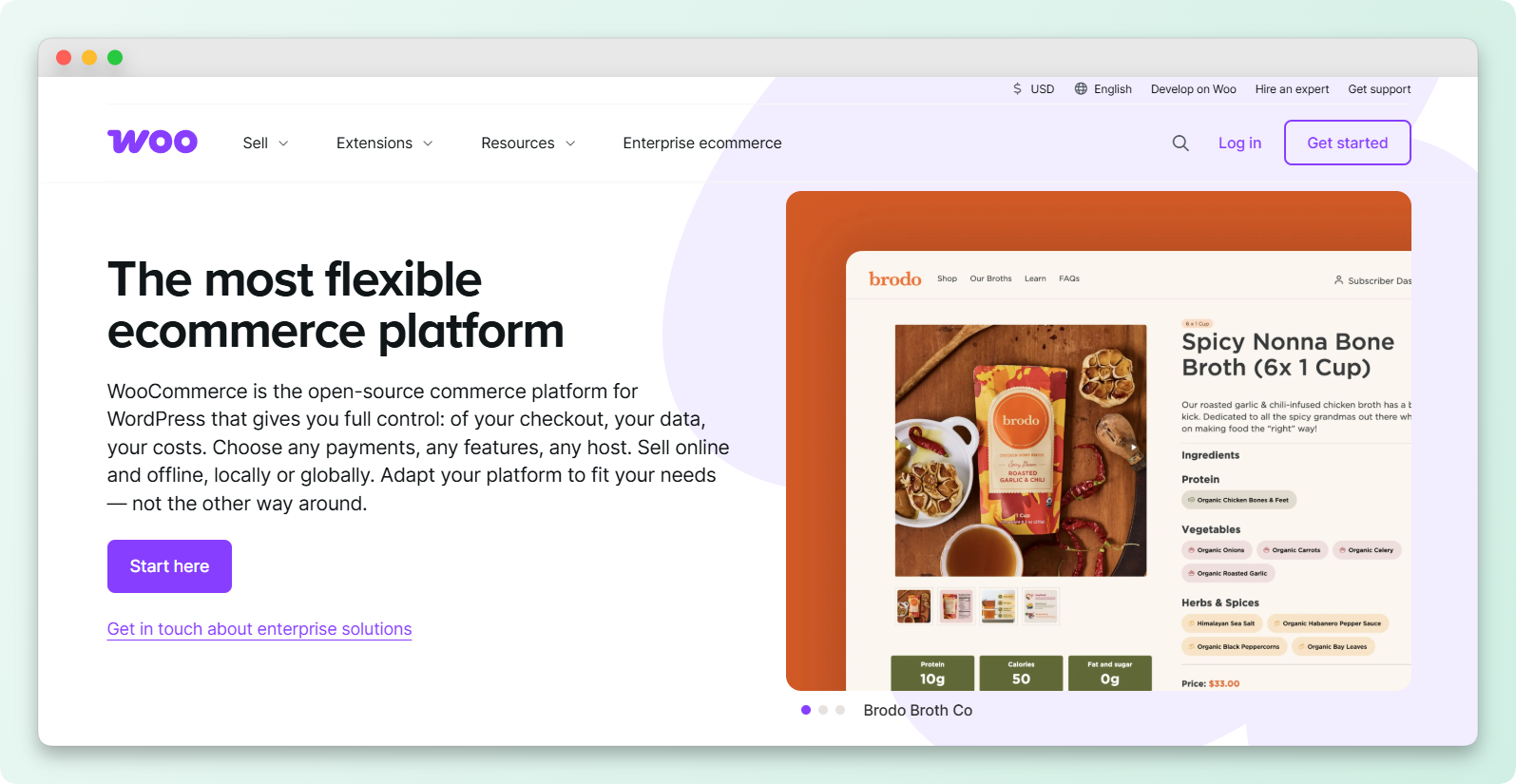
WooCommerce is an open-source platform. It allows store owners to build their wholesale setup using plugins. This gives more control over pricing, workflows, and user roles.
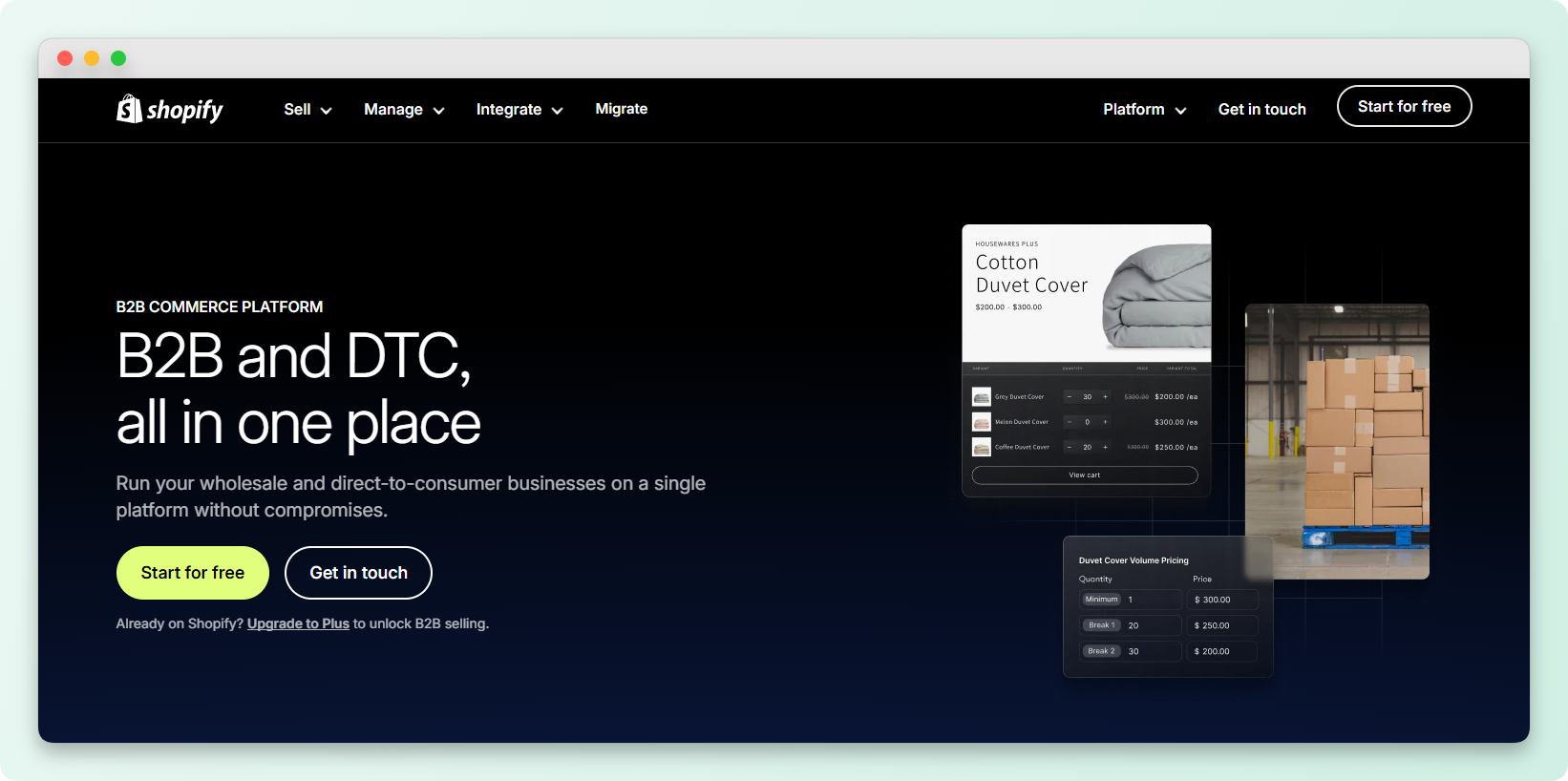
Shopify B2B is built into Shopify Plus. It includes company accounts, price lists, catalogs, and payment terms in one system.
The trade-off is simple. WooCommerce offers greater flexibility and lower costs. Shopify offers a more structured, managed experience.
Why WooCommerce Has An Advantage For Wholesale
One reason WooCommerce Wholesale performs well compared to Shopify B2B is that it does not lock you into a fixed system.
With WooCommerce, you can build your wholesale setup step by step using tools that match your workflow.
A strong example is Wholesale Suite. It provides WooCommerce stores with access to essential wholesale features such as pricing rules, customer registration, bulk ordering, and payment controls.
You can start with the free WooCommerce Wholesale Prices plugin and then expand your setup with tools for Wholesale like:
This makes WooCommerce more practical for businesses that want to grow their wholesale setup over time instead of committing to a large upfront system.
WooCommerce Wholesale Vs Shopify B2B Comparison Table Overview
| Feature | WooCommerce Wholesale | Shopify B2B |
|---|---|---|
| Wholesale pricing | Yes, via plugins like Wholesale Suite | Yes, only on Shopify Plus |
| Customer approval | Yes | Yes |
| Bulk ordering | Strong with order forms | Limited compared to WooCommerce |
| Payment terms | Flexible via plugins | Built-in (Plus only) |
| Product visibility | Role-based control | Catalog-based control |
| Tax handling | Flexible | Built-in (Plus only) |
| Starting cost | Low | High (Shopify Plus required) |
| Customization | High | More structured |
| Best for | Flexible wholesale setup | Enterprise B2B |
Feature Comparison
Pricing and discount flexibility
One of the first major differences between the two platforms is how wholesale pricing is structured.
With WooCommerce, pricing flexibility usually comes from plugins. That means store owners can create role-based pricing, product-specific wholesale prices, percentage discounts, minimum-order rules, and tiered quantity discounts, depending on the plugin stack they use.
A setup like Wholesale Suite makes this easier because it is built around wholesale workflows. Instead of forcing one pricing structure, it allows store owners to adjust pricing rules based on how they actually sell.
Shopify handles pricing differently. Shopify B2B uses price lists that are assigned to companies. This works well for structured pricing, but it is less flexible compared to a plugin-based system.
This is where WooCommerce Wholesale vs Shopify B2B starts to clearly separate. WooCommerce gives more control over pricing logic, while Shopify focuses on simplicity and consistency.
Customer registration & approval
Wholesale stores rarely allow open access. Most require some form of customer approval.
WooCommerce gives more control in this area. Store owners can create custom registration forms, add required fields, and manually approve users before giving them access to wholesale pricing. This is especially useful for stores that need to verify buyers or collect business information.
Tools like Wholesale Lead Capture make this process more structured by combining registration forms with approval workflows.
Shopify B2B takes a different approach. Instead of open registration, it uses company profiles. Store owners manually assign customers to companies and control permissions from the admin side.
Both approaches work, but they serve different types of businesses. WooCommerce is better for stores that rely on inbound wholesale applications, while Shopify is better for businesses that already manage their buyers internally.
Order forms & bulk ordering
Bulk ordering is one of the most important parts of a wholesale store.
WooCommerce has a clear advantage here because it supports dedicated order forms. These allow buyers to add multiple products quickly, adjust quantities in a single view, and place large orders without navigating multiple product pages.
This type of workflow is especially helpful for repeat customers who already know what they want.
Shopify B2B still relies mostly on standard product pages. While it works, it is not as optimized for high-speed ordering.
In real-world use cases, this is one of the biggest differences between WooCommerce Wholesale and Shopify B2B. WooCommerce is built to handle bulk ordering more efficiently.
Payment terms (NET 30/60/90)
Wholesale transactions often involve flexible payment terms.
WooCommerce supports this through plugins. Store owners can offer invoice payments, control which payment gateways are available per user role, and adjust checkout rules based on customer type.
This setup works well for businesses that need different payment flows for different buyers.
Shopify B2B includes built-in payment terms such as Net 30 or Net 60. This is one of its strongest features, but again, it is only available on Shopify Plus.
When comparing WooCommerce Wholesale vs Shopify B2B, WooCommerce offers more flexibility, while Shopify provides a more standardized system.
Product visibility & private store
Wholesale stores often need to hide products or pricing from non-approved users.
WooCommerce allows full control over this. Products, categories, and prices can be restricted by user role. This makes it easier to create private wholesale catalogs.
Shopify B2B handles this through catalogs and company-specific pricing. Products are visible based on assigned companies and price lists.
Both platforms handle this well, but WooCommerce offers more detailed control at the role level.
Tax exemptions & EU VAT
Tax handling is another important part of wholesale operations.
WooCommerce allows tax exemptions and custom tax rules through plugins. This gives store owners more flexibility in how taxes are applied to different types of customers.
Shopify B2B also supports tax exemptions, but they are tied to company profiles and available only on Shopify Plus.
For most use cases, both platforms are capable. The main difference is again flexibility versus structure.
Total cost comparison
This is where the platforms diverge most dramatically for B2B.
WooCommerce + Wholesale Suite:
- Hosting: $10-50/month (SiteGround, Cloudways, etc.)
- Wholesale Suite Bundle: $299/year (all four plugins)
- Or just Wholesale Prices Premium: $99/year
- Transaction fees: Payment gateway only (Stripe 2.9% + 30¢)
- Estimated annual total: $420-900
Shopify Plus (native B2B):
- Platform fee: $2,300/month
- B2B features: Included
- Transaction fees: 0% with Shopify Payments
- Estimated annual total: $27,600
Shopify Basic + B2B Apps:
- Platform fee: $39/month
- B2B apps: $30-100/month (pricing, registration, order form)
- Transaction fees: 2% on third-party payment gateways
- Estimated annual total: $828-1,668
| Cost Component | WooCommerce + Wholesale Suite | Shopify Plus | Shopify Basic + Apps |
|---|---|---|---|
| Platform | Free (self-hosted) | $2,300/mo | $39/mo |
| Hosting | $10-50/mo | Included | Included |
| B2B Features | $299/yr (bundle) | Included | $30-100/mo in apps |
| Transaction Fees | Gateway only | 0% (Shopify Payments) | 2% (third-party) |
| Annual Total | $420-900 | $27,600 | $828-1,668 |
The math speaks clearly: WooCommerce + Wholesale Suite costs 96-97% less than Shopify Plus for comparable B2B features. Even compared to Shopify Basic with apps, WooCommerce comes in at roughly half the cost with better features.
Ease of use & setup
WooCommerce requires choosing a host, installing WordPress, then installing WooCommerce and plugins.
But here’s what I’ve found in practice: WooCommerce’s initial setup complexity is a one-time cost. Shopify’s simplicity can become a limitation when B2B requirements become complex. Adding custom wholesale registration, modifying checkout flows, or building unique pricing rules is straightforward in WooCommerce and often impossible — or requires expensive custom development — in Shopify.
Scalability & integrations
WooCommerce:
- Unlimited international markets and currencies
- Any payment gateway (not locked to one provider)
- Open-source with full API access — connect to any ERP, CRM, or accounting system
- 59,000+ WordPress plugins for extending functionality
- Full data ownership — you control everything
Shopify:
- Capped at 50 markets (relevant for international wholesale)
- Shopify Payments preferred (third-party gateways incur extra fees)
- Growing app ecosystem, but less flexibility for custom integrations
- Shopify owns your storefront — if you leave, you start from scratch
For wholesale stores that need to integrate with existing systems — ERP, CRM, accounting software, custom inventory management — WooCommerce’s open architecture is a significant advantage. For a full list of verified Wholesale Suite integrations, see the integrations page.
B2B Feature Comparison Table
| B2B Feature | WooCommerce + Wholesale Suite | Shopify Plus ($2,300/mo) | Shopify Basic ($39/mo) |
|---|---|---|---|
| Role-Based Pricing | ✓ (unlimited roles) | ✓ (Company Profiles) | ✗ (needs app) |
| Tiered Volume Discounts | ✓ | ✓ (Price Lists) | ✗ (needs app) |
| Custom Registration Form | ✓ (Lead Capture) | ✗ (manual creation) | ✗ |
| Dedicated Order Form | ✓ (Order Form plugin) | ✗ (needs app) | ✗ (needs app) |
| NET 30/60/90 Invoicing | ✓ (Wholesale Payments) | ✓ | ✗ |
| Product Visibility by Role | ✓ (granular) | ✓ (catalog-based) | ✗ (needs app) |
| Tax Exemption/EU VAT | ✓ | ✓ | Limited |
| Payment Gateway Mapping | ✓ | ✗ | ✗ |
| Wholesale Sales Reports | ✓ | Limited | ✗ |
| Min Order Qty/Amount | ✓ | ✓ | ✗ (needs app) |
| Unlimited Wholesale Roles | ✓ | Limited | ✗ |
| Shipping by Role | ✓ | Limited | ✗ |
| Private Store Mode | ✓ | ✓ | ✗ (needs app) |
| Open API Access | ✓ (full wholesale API) | ✓ (Shopify API) | ✓ |
When To Choose Each Platform
Choose WooCommerce + Wholesale Suite if you:
- Need flexible B2B features without enterprise pricing
- Already use WordPress or want full platform ownership
- Require complex pricing rules, tax configurations, or payment gateway mapping
- Are you an agency building wholesale stores for clients (Wholesale Suite’s unlimited license covers all projects at $199/yr)
- Need to integrate with existing ERP, CRM, or accounting systems
- Want to start with a free wholesale plugin and scale up
Choose Shopify Plus if you:
- Have the budget ($2,300/mo) and want fully managed hosting
- Need Shopify’s ecosystem (POS, Shopify Payments, Shopify Markets)
- Your B2B needs are relatively standard (company profiles, price lists, NET terms)
- Don’t need a dedicated order form or self-service registration
Choose Shopify Basic + Apps if you:
- Have minimal B2B needs (basic wholesale pricing only)
- Prioritize ease of setup above all else
- Don’t need NET terms, order forms, or custom registration
Final Verdict
WooCommerce + Wholesale Suite is the recommended choice for wholesale and B2B stores.
After comparing both platforms across every B2B dimension — features, cost, flexibility, and scalability — WooCommerce with Wholesale Suite is the stronger option for the vast majority of wholesale businesses. It delivers more B2B features, greater customization, and full platform ownership at 96% of the cost of Shopify Plus. If you’re also evaluating BigCommerce, our expanded three-platform comparison adds BigCommerce B2B Edition to the analysis so you can see all three side by side.
Here’s what we discussed so far:
- Quick platform overview
- Why WooCommerce has an advantage for wholesale
- WooCommerce wholesale vs Shopify B2B comparison table
- Feature comparison
- Feature comparison table
- When to choose each platform
Wholesale Suite is best for store owners who want a complete, proven wholesale toolkit — tiered pricing, self-service registration, dedicated order forms, and NET 30/60/90 invoicing — without paying enterprise prices. Whether you are a single-store owner or an agency building for clients, the modular approach lets you start small and scale without hitting a platform ceiling.
Start with the free WooCommerce Wholesale Prices plugin to validate your wholesale model at zero cost. When you’re ready for the full suite, the Wholesale Suite bundle gives you everything for $299/year.
Frequently Asked Questions
Can I migrate from Shopify to WooCommerce for wholesale?
Yes. Tools like Cart2Cart and LitExtension handle product, customer, and order migration. The bigger task is reconfiguring your wholesale setup — pricing rules, registration forms, and payment terms will need to be rebuilt in Wholesale Suite. For a detailed walkthrough, see our guide to creating a wholesale website from scratch.
Does WooCommerce need more technical knowledge than Shopify for B2B?
For initial setup, yes — WooCommerce requires hosting and WordPress knowledge. But managed WordPress hosts like SiteGround and Cloudways have simplified this significantly. Once set up, managing wholesale features through Wholesale Suite is point-and-click — no coding required.
Can I run B2B and retail on both platforms?
Yes, both support hybrid stores. WooCommerce + Wholesale Suite handles this natively — retail customers see regular prices, wholesale customers see wholesale prices on the same store. Shopify Plus uses separate B2B catalogs. On Shopify Basic, you’d need apps to separate the experiences.
Which platform is better for international wholesale?
WooCommerce. It supports unlimited markets, any currency, any payment gateway, and has no geographic restrictions. Shopify caps at 50 markets and prefers Shopify Payments. For complex international tax and shipping rules common in wholesale, WooCommerce’s flexibility is a clear advantage.