
Selling wholesale is a lot more complicated than setting up an online retail store. Wholesale customers have an entirely different set of expectations and you need to use an e-commerce platform that can match them. Figuring out what the best B2B wholesale platform for those needs is can be a challenge.
There are a lot of wholesale e-commerce platforms and software that you can use to set up your store. However, each platform comes with a different set of features. Understanding what those features are is key to choosing the best B2B wholesale platform for your customers.
In this article, we’ll go over five of the best B2B e-commerce & wholesale platforms that you can use. We’ll discuss features, prices, and when to use each of them. Let’s get to it!
1. Wholesale Suite for WooCommerce
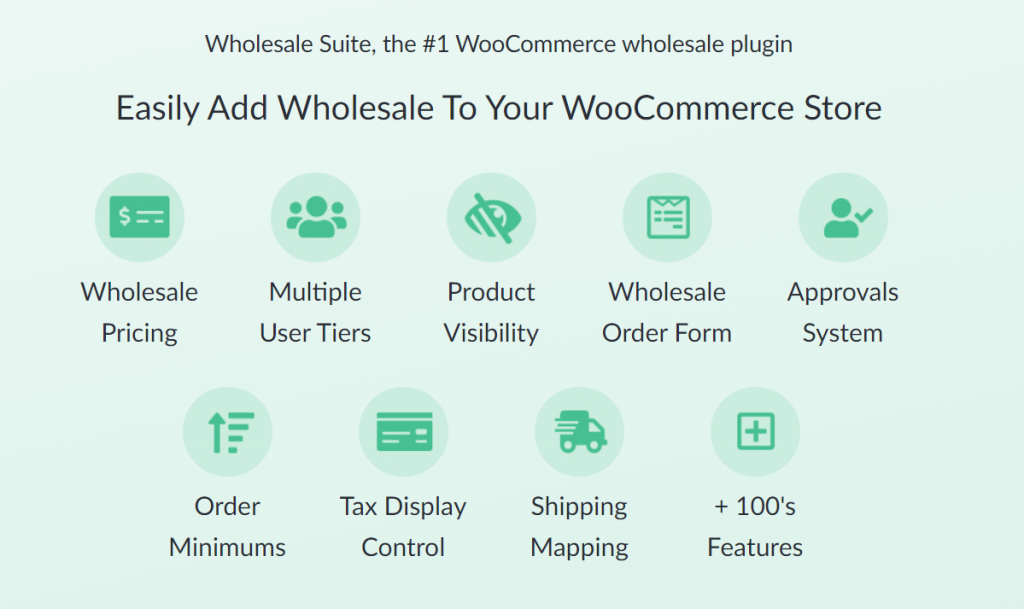
Wholesale Suite is a collection of three plugins that add a broad range of wholesale features to WooCommerce. Out of the box, WooCommerce is geared towards retail e-commerce operations. However, these three plugins add all of the wholesale functionality that you might need.
Let’s break down what each of the three plugins in Wholesale Suite do:
- Wholesale Prices Premium: This plugin enables you to add multiple custom wholesale user roles to your website. Then you get to set specific wholesale prices for each of those user roles.
- Wholesale Order Form: Using this plugin you can streamline your WooCommerce shop page and offer a more wholesale-friendly experience. Customers will be able to order in bulk, browse your entire catalog with ease, and more.
- Lead Capture: This plugin enables you to create custom wholesale user registration forms. You also get to approve registrations manually or automate the process.
Wholesale Suite uses a modular approach that lets you choose the plugins and features that you want to implement. At its core, you have Wholesale Prices Premium. With this plugin, you’ll be able to transform your WooCommerce website into a full-blown wholesale operation.
You can even use a free version of the Wholesale Prices plugin, which enables you to set up a single wholesale user role, which can be enough for a lot of stores. That makes Wholesale Suite the best B2B wholesale platform you can use.
Wholesale Suite costs $148.50 for a yearly license. However, you can also purchase each of its components separately if you don’t need access to the entire suite.
2. Shopify

Shopify is one of the most popular e-commerce solutions for small businesses due to its ease of use. The platform makes it easy to create basic stores and publish products. That applies even if you don’t have any experience with web development.
Besides being a great option for small businesses, a lot of large companies such as Kylie Cosmetics and Red Bull use Shopify because it can handle large influxes of customers. However, despite its popularity among retailers, the platform isn’t designed for wholesale operations.
You can add wholesale features to your Shopify store using apps, though. There are a lot of Shopify apps designed to help you run wholesale operations. You have options that enable you to set wholesale prices and manage B2B customers.
One downside of these apps is that they mostly work on a subscription basis. That means if you want to use this platform for a wholesale store, you’ll end up paying for multiple subscriptions on a monthly basis.
To give you a rough cost estimate, Shopify’s entry plans start around $25 per month, and that tier also carries a per-transaction fee on their own payment processor. Using an outside processor adds another cut on top, up to 2% on entry plans and less on the higher tiers. Wholesale apps generally start at around $20 per month as well, so the monthly total climbs quickly.
💡 Pro Tip: When choosing between Shopify and WooCommerce, consider the long-term implications of ownership and scalability. For a deeper dive into how these models differ specifically for multi-vendor environments, check out this comparison of WooCommerce Vs SaaS Marketplace Platforms.
3. QuickBooks Commerce
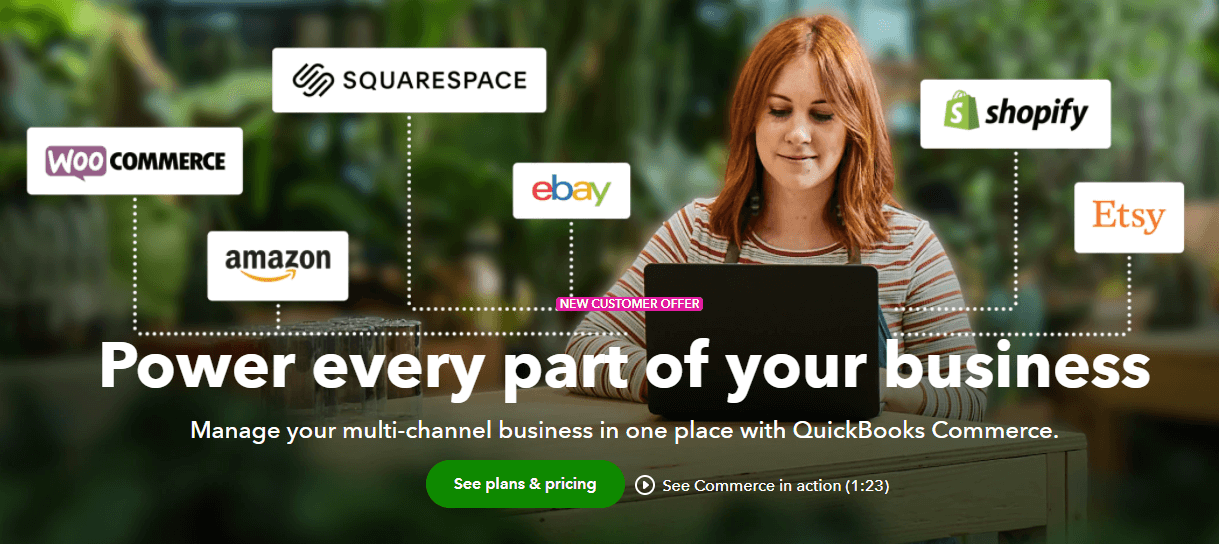
These days, the QuickBooks brand isn’t just about accounting. A year ago, QuickBooks purchased an inventory and order management company called TradeGecko. They took their product, added sales functionality, and rebranded it as QuickBooks Commerce.
QuickBooks Commerce is a B2B e-commerce & wholesale platform that integrates with many third-party services. You can use QuickBooks Commerce to connect your store with Shopify, WooCommerce, and even Fulfillment by Amazon.
This approach lets you combine the best features of each platform to deliver a great wholesale experience for your customers. Moreover, you also get access to in-depth analytics, invoicing functionality, and more.
4. WP Forms or Formidable Forms
If you want to stick with a simple WooCommerce store instead of using a full-blown wholesale platform, there are ways to make that work. For example, you can use plugins such as WPForms (one of our favorite contact form plugins) or Formidable Forms to set up manual wholesale order forms for your store:
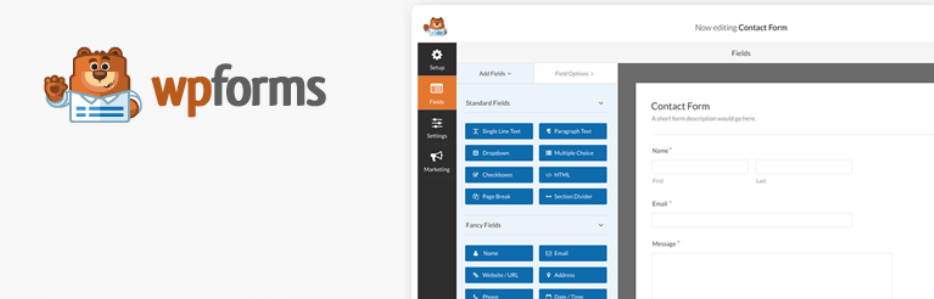
Both of those plugins enable you to add payment functionality to your order forms, which means they’re perfect for e-commerce integration. If you want to opt for this approach, we recommend that you enable product catalog mode in WooCommerce:
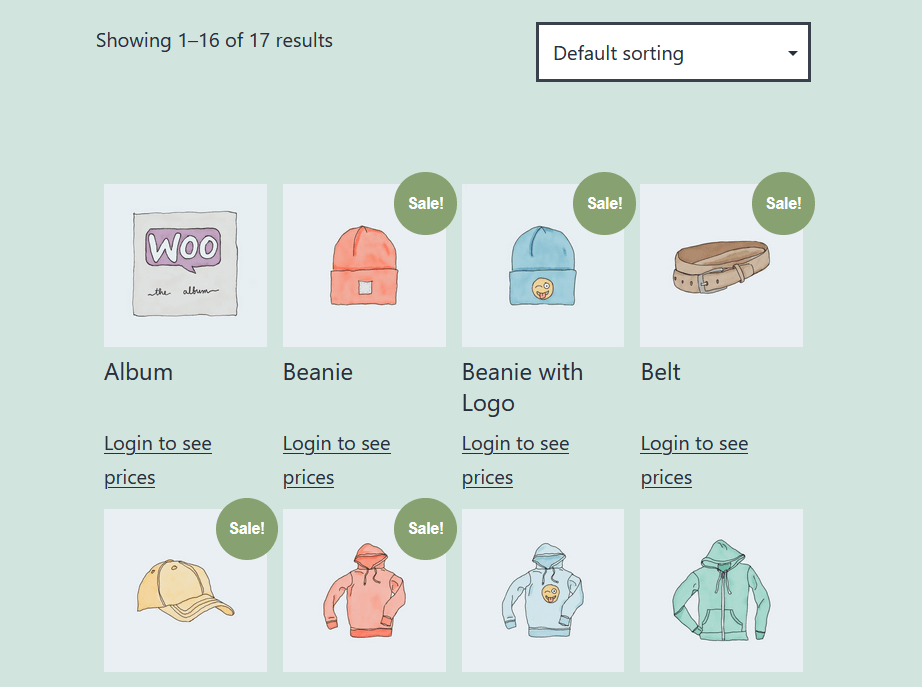
With product catalog mode, you can show prices to wholesale customers only. If they want to make a purchase, they can use a wholesale order form that you set up for that purpose.
Although this approach works well on a budget, it’s not particularly user-friendly or efficient. That is because you’ll need to process each purchase order manually instead of letting WooCommerce handle the checkout and payment processing steps.
If you want to stick with WooCommerce, your best bet is to use wholesale plugins instead. With Wholesale Suite, you can easily set up a wholesale store that doesn’t require as much micromanagement.
5. Spreadsheets or PDFs
Old-school wholesalers used to run entire online operations using spreadsheets and product catalogs in PDF format. It’s a basic approach that works, but it doesn’t offer a user-friendly experience for your wholesale customers. Plus, this approach adds a massive amount of work on your end.
Product spreadsheets need constant updates and that applies in particular to wholesale operations. If you have customers ordering hundreds of units of multiple products, you’ll need to update your inventory in those spreadsheets every day or even more often.
Moreover, product catalog PDFs require a lot of work to update and edit. If you use a website instead, you can edit any product or update its details in a matter of minutes.
Although this old-school wholesaling approach is very budget-friendly, it’s not a good solution if you want to scale your business. If you intend to grow your wholesale operation into a serious business, then you need a website.
Comparison: Wholesale Suite Vs Other B2B Wholesale Options
Here’s how Wholesale Suite stacks up against the most-searched B2B wholesale tools for WooCommerce stores. The table compares the modular Wholesale Suite plugin bundle against B2BKing (an all-in-one WooCommerce plugin), SparkLayer (a SaaS B2B platform), Extend B2B (an all-in-one B2B plugin), and WooCommerce B2B Marketplace (a WooCommerce-focused B2B plugin). Wholesale Suite wins on cost model, WooCommerce native fit, and modular setup — the criteria that matter most for a WooCommerce store running a B2B operation.
| Feature | Wholesale Suite | B2BKing | SparkLayer | Extend B2B | WooCommerce B2B Marketplace |
|---|---|---|---|---|---|
| Cost model | One-time annual license ($99 single site, $299 All Access Bundle) | Annual or Lifetime license | Monthly SaaS subscription | Annual plugin license | Annual plugin license |
| WooCommerce native | ✅ Built for WooCommerce only | ✅ Built for WooCommerce only | ⚠️ SaaS layer connects to WooCommerce via integration | ✅ Built for WooCommerce only | ✅ Built for WooCommerce only |
| Modular setup (install only what you need) | ✅ Five separate plugins — pick the ones you need | ❌ Single all-in-one plugin | ❌ Full SaaS platform | ❌ Single all-in-one plugin | ❌ Single plugin |
| NET payment terms | ✅ NET 30, NET 60, NET 90, and split-payment plans via Wholesale Payments | Invoice and deferred payments supported | ⚠️ Available — typically requires higher-tier plan | ⚠️ Available — verify exact NET options on the official site | ⚠️ Verify on the official site |
| Dedicated bulk order form | ✅ Wholesale Order Form — AJAX-driven, built for fast reordering | ⚠️ Quick order form available | ⚠️ Bulk ordering available | ⚠️ Bulk ordering available | ⚠️ Verify on the official site |
| Active stores | ✅ 25,000+ active stores | 15,000+ active stores | 3,500+ brands | Verify on the official site | Verify on the official site |
| Code ownership | ✅ You own and host the plugin code | ✅ You own and host the plugin code | ❌ Hosted by SaaS vendor | ✅ You own and host the plugin code | ✅ You own and host the plugin code |
The pattern is consistent across every row: Wholesale Suite is the strongest fit when your store is on WooCommerce and you want a modular plugin suite rather than a single monolithic plugin or a hosted SaaS platform. SaaS B2B platforms win on a narrow set of criteria — fully hosted infrastructure and vendor-managed updates — but those advantages come with monthly subscription costs that rise with order volume and a layer of indirection between your WooCommerce store and your wholesale workflow.
For a WooCommerce store operating in a B2B capacity, the modular plugin suite path is the more practical choice. For a broader B2B ecommerce platform comparison that includes BigCommerce alongside Shopify and WooCommerce, we cover the full three-way breakdown in detail. Explore the All Access Bundle to pick the right tier for your store.
Conclusion
There are a lot of e-commerce platforms that you can use for your wholesale business. However, most e-commerce platforms and software aren’t built with wholesale projects in mind. Therefore, you need to find ways to adapt those platforms to the needs of your customers. This can make it extra challenging to find the best B2B wholesale platform for your business.
In this guide, we’ve reviewed the best B2B wholesale platform and other options you can explore. To summarize, let’s review them below:
If you’re looking for the best B2B wholesale platform, we recommend Wholesale Suite for WooCommerce. Using WooCommerce and WordPress means that you’re in full control of your website. Wholesale Suite also offers a massive range of features for wholesale stores and you can pick and choose which of its plugins to use.
Do you have any questions about how to choose the best B2B wholesale platform for your needs? Let’s talk about them in the comments section below!
Frequently Asked Questions
What is a B2B wholesale platform?
A B2B wholesale platform is the software stack that lets a business sell to other businesses online. It handles role-based pricing, wholesale customer registration and approval, bulk ordering, tax exemption rules, and payment terms like NET 30 or NET 60. The “platform” can be a hosted SaaS service, a custom ecommerce build, or a set of plugins running on top of WooCommerce. For most WordPress and WooCommerce stores, the practical B2B platform is a wholesale plugin suite that adds these B2B features to the existing storefront, instead of replacing the whole stack with a separate SaaS tool.
Do you need a B2B wholesale platform or a WooCommerce wholesale plugin?
It depends on what your store already runs on. If your business is already on WooCommerce, you almost always want a wholesale plugin suite rather than a separate SaaS B2B platform. A plugin suite like Wholesale Suite adds role-based pricing, a bulk order form, a wholesale lead capture and approval queue, and NET payment terms directly into your WooCommerce store, so your B2C and B2B operations share one product catalog, one checkout, and one customer database. A standalone SaaS platform makes more sense only if your store is not on WooCommerce, you’re rebuilding from scratch, or you need a fully hosted B2B portal that sits outside your main site.
What are the tradeoffs between WooCommerce plus a plugin suite and a SaaS B2B platform?
The main tradeoff is control and cost versus convenience. With WooCommerce and a wholesale plugin suite, you own the code, your data lives on your own hosting, and you pay an annual license fee rather than a recurring monthly platform subscription. You also keep your existing themes, shipping integrations, and payment gateways, which means no replatforming project. A SaaS B2B platform, by contrast, is fully hosted and typically charges monthly. It removes some maintenance work but locks your B2B operation to that vendor’s roadmap, pricing changes, and feature set. For a growing WooCommerce store, the plugin suite path usually costs less over a multi-year horizon and keeps the door open to customizing anything the wholesale workflow needs.
Who should choose Wholesale Suite over a SaaS B2B platform?
WooCommerce store owners running a B2B operation alongside (or instead of) their B2C catalog are the clearest fit for Wholesale Suite. It’s built specifically for stores that want to add wholesale functionality to an existing WooCommerce site without replatforming. If your business already runs on WordPress, you have a working theme and payment setup, and you want to add tiered wholesale pricing, a dedicated bulk order form, an approval queue for new wholesale buyers, and NET payment terms, Wholesale Suite handles all of that without forcing you to move to a separate SaaS portal. It’s also a strong fit for agencies and developers managing multiple B2B WooCommerce builds for clients.
How does the total cost of Wholesale Suite compare to a SaaS B2B platform?
Wholesale Suite is sold as an annual plugin license, while most SaaS B2B platforms charge a monthly subscription that scales with your order volume, user count, or feature tier. The Wholesale Suite Growth Bundle starts at $148.50 per year for a single site, and the Business Bundle is $298.50 per year for unlimited sites — both include the full set of plugins (Wholesale Prices Premium, Wholesale Order Form, Wholesale Lead Capture, and Wholesale Payments). SaaS B2B platforms typically start in the low-to-mid hundreds per month for a small store and climb quickly as your wholesale volume grows. Over a 2-to-3 year horizon, the plugin suite path is usually noticeably less expensive for stores that don’t need a fully managed hosted platform. (See current pricing on the Wholesale Suite pricing page.)
Is a wholesale plugin suite scalable enough for a serious B2B operation?
Yes. Wholesale Suite powers more than 25,000 active stores, including high-volume B2B operations running tiered pricing across thousands of SKUs and unlimited wholesale roles. Scalability for a B2B WooCommerce store is mostly about three things: how the plugin code is written, how well your hosting is configured, and how the database handles wholesale-specific queries. A well-built plugin suite running on solid managed WordPress hosting handles serious B2B order volume without issue. The actual ceiling for most WooCommerce stores is hosting and database tuning, not the wholesale plugin layer. SaaS B2B platforms become genuinely more useful at a different scale — typically when you’re running international warehousing, multi-currency catalogs across regions, or a dedicated B2B mobile app — not just because order volume is high.
When does a SaaS B2B platform make more sense than a plugin suite?
A SaaS B2B platform makes more sense in a narrow set of cases. If your business is not on WooCommerce or WordPress at all and you don’t want to migrate, a hosted B2B platform gives you a turnkey storefront without standing up a WordPress site. If you’re an enterprise with a dedicated B2B portal separate from your B2C site, a SaaS platform’s hosted, single-tenant infrastructure can simplify procurement and security reviews. And if your team genuinely doesn’t have WordPress administration capacity, the managed nature of SaaS removes one operational task. For everyone else — and especially for WooCommerce stores adding wholesale to an existing catalog — a plugin suite is the better fit on cost, control, and integration with the rest of the stack.
When does a wholesale plugin suite make more sense than a SaaS platform?
A plugin suite is the right pick when your store is already running on WooCommerce, you want to add B2B features without rebuilding the storefront, and you’d rather pay an annual license than a monthly subscription. It’s also the better choice when you want one unified product catalog across B2C and B2B customers, when you need to keep using your current theme and payment gateways, and when you want to own the code and data rather than rent it. Most growing WooCommerce stores running wholesale alongside their retail catalog fall squarely into this category, which is why a modular plugin suite like Wholesale Suite usually beats a SaaS platform on real-world fit, even when the SaaS pitch sounds simpler at first glance.