
Have you ever walked into a store for one thing, then walked out with three? I have been there, too! I often tell myself, “Oh, come on, self! Another impulsive buying.” This led to a realization: why it helps to understand impulse buying examples (You know, to set an example!). They show how fast we can change our minds when something looks fun, useful, or just too tempting to ignore.
What makes this so common is that impulse shopping happens in normal moments. You might be scrolling online, then you see a small item that feels cheap enough to add. Or you might be at the checkout line, then you spot snacks, mini tools, or travel-size items. Because of that, impulse purchases happen both online and in stores. It is not always about being careless. Often, it is simply how our brain reacts.
In this article, I will share five impulse buying examples that might be helpful for you. You will learn what triggers it, and how it shows up in real shopping situations.
Ready? Okie dokie, let’s get to it!
What Is Impulse Buying?
Impulse buying is when you buy something you did not plan to buy. It happens fast. You see an item, feel a quick urge, and then add it to your cart or basket. In other words, it is an impulse buy.
According to statistics, 84% of all shoppers have made impulse purchases.
I have done it before, and you probably have too.
The big difference between planned purchases and impulse purchases is the decision time. With a planned purchase, you usually think about it first. You might compare prices, read reviews, or set a budget. However, with impulse shopping, the decision is more about the moment. You see a product that feels useful, fun, or “good enough,” so you decide right away.
Impulse buying is also part of normal customer behavior. That might sound surprising, but it makes sense once you notice the patterns. Stores and websites are built to show you tempting items at the right time.
For example, you see add-ons at checkout, bundles that look like a good deal, or products labeled as “popular.” Because of that, impulse buying behavior shows up even when you think you are shopping carefully. It does not always mean you made a bad choice. It just means the trigger was strong enough to shift your decision in seconds.
Common Reasons Behind Impulse Buying
Impulse buying usually happens for a reason. When something triggers you, then your brain says, “Go for it.” I have felt that too, seriously, especially when I am tired, stressed, or just… bored. Because of that, knowing what triggers you and knowing these impulse buying examples can be very helpful.
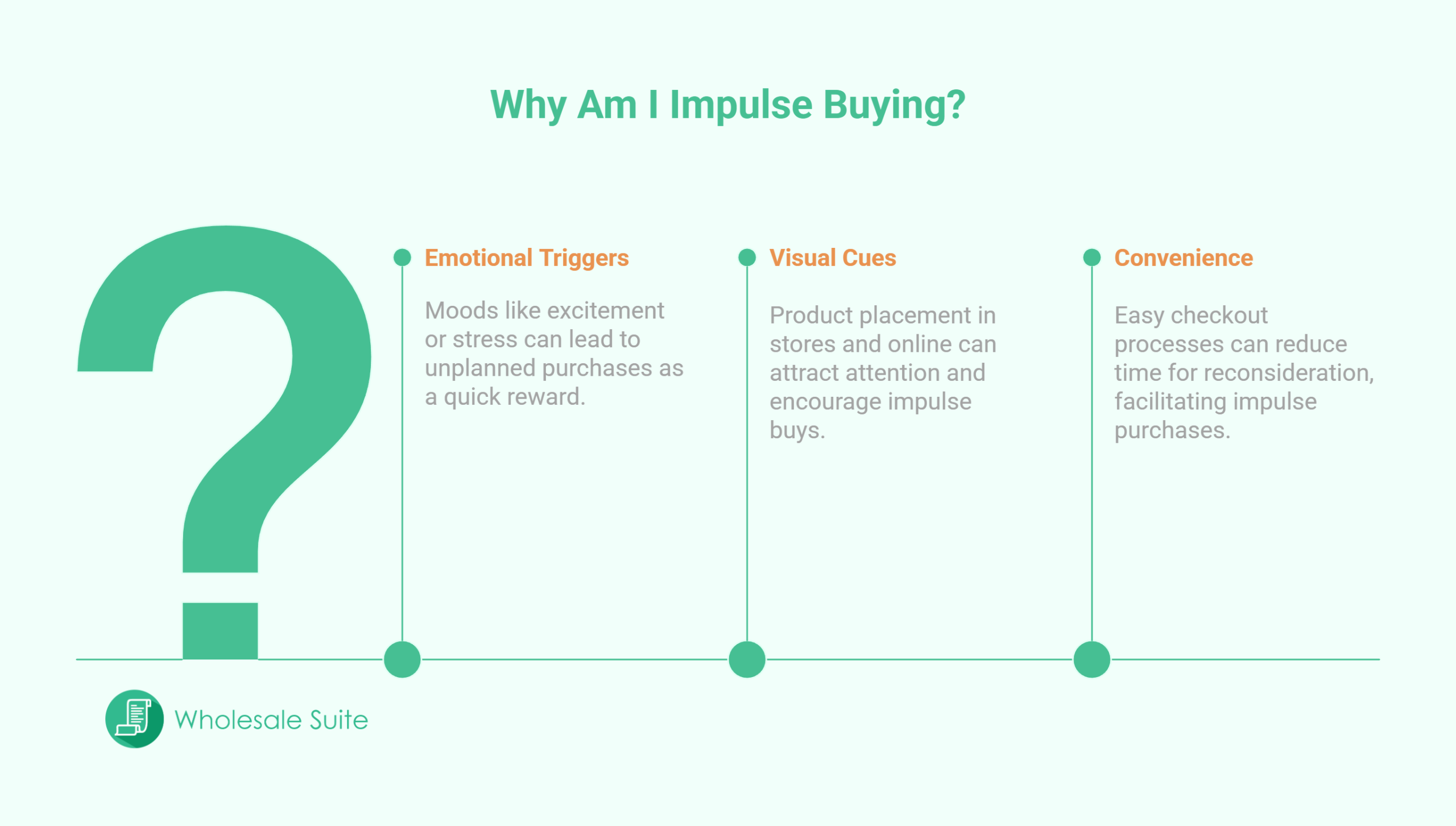
Emotional triggers like excitement or stress
Your mood can push impulse shopping. When you are excited, you might feel more open to fun items. When you are stressed, you might impulse buy as a small comfort. Because of that, an unplanned purchase can feel like a quick reward, even if you did not plan it earlier.
Visual cues and product placement
Where you see a product matters. Stores place small items near checkout for a reason. Online stores do something similar near the cart. As a result, you notice tempting items right when you are already in buying mode. That is one reason impulse buying behavior can happen fast.
You may also want to read this: Which Types Of Merchandising Should You Use? (Full Guide)
Convenience and ease of checkout
The easier it is to buy, the easier it is to impulse buy. If checkout is quick, you do not have much time to pause and think. For example, saved cards and fast checkout options make impulse purchases feel simple. Meanwhile, if buying takes more steps, you get more time to reconsider.
Time pressure and limited availability
Urgency is a strong trigger. If you think the item might run out, you feel pressure to decide now. This happens with flash sales, countdown timers, or low stock messages. Therefore, you might buy to avoid regret later, even if it was not part of your plan.
5 Impulse Buying Examples You See Everywhere
Before we go into the list, I want you to note one thing. These impulse buying examples are not rare. You see them in grocery stores, online shops, and even on mobile apps. Because of that, it helps to know what they look like in real life. Once you spot them, you will also understand your own impulse buying behavior better.
📝 If you sell to both retail shoppers and wholesale buyers, you can also control what each group sees. For example, Wholesale Suite lets you set wholesale roles and pricing rules so the right items appear for the right customer type.
1. Checkout add-ons
This is one of the most common impulse purchases. Imagine this: you’re about to pay, so let’s assume you’ve already done the ‘hard’ parts of your shopping. Then you see small items that look ‘useful’ or something you might need for later. It can be snacks, batteries, phone cords, or mini beauty items. Since the price looks small, you might impulse buy without thinking too much.
Online stores do this too. You might be on the cart page, then you see “add this for only $5” or “people also add this.” As a result, you add an extra item because it feels easy and too cheap to get. This is a classic moment where impulse shopping kicks in.
2. Limited-time offers
Limited-time offers push fast decisions. You see a countdown timer or a message that says the deal ends soon. Because of that, your brain feels the pressure. You might tell yourself you will miss out if you do not buy now.
This is why flash sales work in most cases. Even if you did not plan to buy, the time limit makes the purchase feel urgent. So you impulse buy to avoid regret later. This is one of those impulse buying examples that feels very common online.
Get more ideas here: Sales Promotion Ideas To Gain New Customers (36+ Proven Techniques)
3. Product bundles
Bundles can feel like a good deal. You see two or three items grouped together, and the price looks better than buying them individually. As a result, you might buy more than you planned.
💡 Bundles also show up in wholesale, just in a different form. Instead of “bundle deals,” it might look like a starter pack for new retailers or a case assortment for repeat buyers. If you use Wholesale Suite, you can set pricing by wholesale role, so those packs stay consistent for each buyer group.
For example, you wanted one shampoo, but the bundle includes conditioner and a hair mask. You did not plan those extras, yet the bundle makes them feel like a smart choice. That is how impulse purchases happen. The bundle gives you a reason to say yes quickly.
Want to know more about bundles? Read more here: 12 Bundle Pricing Examples You Need To Know.
4. Free shipping thresholds
This one is super common in ecommerce. You add items to your cart, then you see a message like “Spend $10 more for free shipping.” Suddenly, you start hunting for something small to reach that number.
You might add socks, snacks, or a small accessory you did not even want at first. However, it feels better than paying shipping. Because of that, you impulse buy just to hit the free shipping goal. This is one of the most relatable impulse buying examples for online shoppers. I’ve definitely done it myself!
5. Recommended or related products
Recommendations work because they feel personal. You see “Customers also bought” or “You may like this.” Then you start thinking, “Maybe I need that too.” It can also feel like social proof, since other people bought it.
Sometimes these suggestions show up at the perfect time. You are already interested in one product, so your brain is open to more. As a result, impulse shopping happens and you add an extra item. This is a common trigger for impulse buying behavior, especially online.
Impulse Buying Examples In Ecommerce Vs Physical Stores
I have done impulse buying more times than I want to admit. That is why comparing impulse buying examples in ecommerce versus physical stores is another topic worth exploring. The result can look the same, but the way you get pulled in can feel different. Here’s why:
How impulse buying works online
When I shop online, the biggest trigger is how fast everything moves. You see something, you tap, and it is in your cart. Voila! It was that easy… and yet… scary. In some cases, it’s too late to realize when you’ve already made your purchase. As ironic as it may sound, it is easier to make impulse purchases because you do not get much time to pause.
I also notice how many little nudges show up online. You see countdown timers, “only a few left” messages, and those “customers also bought” suggestions. I might tell myself I will ignore them. However, the moment something feels limited, my brain starts rushing. You feel the pressure, then you have to decide fast.
How it works in brick-and-mortar stores
In a physical store, I feel the trigger more because the product is right there. You can pick it up, look at it closely, and imagine using it. Because of that, the temptation can feel stronger.

Stores also use placement really well. I always see small items near the checkout line. You are already about to pay, so your brain feels like the shopping part is done. Then you spot gum, snacks, travel-size items, or small gadgets. You think, “Why not?” Then you impulse buy. This is one of the most common impulse purchases in physical stores.
Key differences in triggers and timing
Online impulse shopping is often pushed by speed and screen-based cues. In-store impulse shopping is pushed by placement and the real-life moment. However, both follow the same pattern. You notice something, feel a quick urge, and act on it.
So when you look at impulse buying examples, the difference isn’t just the product. It is the setting that shapes your decision. Once you see that, it becomes easier to spot what pulls you in. That way, you understand your own impulse purchases better, whether you are scrolling at night or walking through an aisle.
Ethical Considerations Around Impulse Buying
Impulse shopping is normal. I am not here to shame it, and I am not here to label it as bad. However, there is a line between helpful and misleading. If you sell online, you want customers to feel good about what they bought. If they feel tricked, they will not trust you next time. That is why it helps to talk about ethics when we talk about these impulse buying examples.
📝 One simple way to keep things fair is to keep pricing and rules clear for every customer type. If you sell wholesale, Wholesale Prices helps you show the right pricing for each wholesale role, so buyers are not surprised when they reach checkout.
Avoiding misleading tactics (this is a must!)
Some tactics can push impulse purchases in a way that feels dishonest. For example, fake urgency is a problem. If a store always shows a countdown timer, customers will eventually notice it is not real. The same goes for “only three left” messages that never change. Once customers lose trust, your store loses repeat buyers.
If you want to encourage an impulse buy, it should be based on something real. If the stock is actually low, it is fine to say so. And when a sale really ends today, you can mention it. The key is honesty. That way, impulse buying behavior still happens, but it does not leave customers feeling annoyed.
Balancing convenience with transparency
Fast checkout is great, but customers still need clarity. They should know what they are paying for, what the total includes, and what happens after they place the order. When things are confusing, impulse purchases can lead to regret, and of course, we don’t want that happening, do we? Then you deal with refunds, complaints, or chargebacks.
I always think of it this way. If you want quick decisions, you also need clear information. Show prices clearly. Make shipping costs easy to understand. Make return rules easy to find. That way, impulse shopping stays fun and simple, instead of turning into a messy customer support issue.
Building trust while encouraging extra purchases
Trust is what keeps your store healthy long term. If you want to use upsells, bundles, or recommendations, do it in a way that feels helpful. For example, “people also bought” suggestions can work well when they actually match what the customer is buying. Bundles can also make sense when the items truly go together.
Conclusion: Using Impulse Buying Examples To Understand Customer Behavior
Let’s recap what we covered so far:
- What is impulse buying
- Common reasons behind impulse buying
- Impulse buying examples you see everywhere
- Ecommerce vs physical stores
- Ethical considerations
I also want to say this clearly. Impulse buying is not always a negative thing. Sometimes you impulse buy because the item is truly helpful. You might also do it because it saves you time. The problem starts when the pressure feels fake or the information feels unclear. It is normal, but it still needs honest cues and clear details.
If you run an online store, you can use these ideas in a responsible way. For example, you can make add-ons relevant and keep offers honest. You can also keep checkout clear so people understand what they are actually paying for.
If you sell wholesale on WooCommerce, tools like Wholesale Suite can help you organize customer roles, pricing, and ordering pages. That way, add-ons and bundles feel consistent for each buyer group, and your store rules stay clear.
Hence, you can use these impulse buying examples as a guide to prompt people to make quick decisions, so you can design a better shopping experience that still feels natural and fair.
That’s all for now, folks! Do you have any questions or other suggestions? Let me know in the comments!
Frequently Asked Questions
What ethical considerations should sellers keep in mind regarding impulse buying?
Sellers should avoid misleading tactics such as fake urgency or false scarcity, ensure transparency about prices and stock levels, maintain honest communication, and build trust by providing clear information and relevant suggestions, to make impulse buying fair and trustworthy.
How does impulse buying differ between online shopping and physical stores?
Online impulse buying is often driven by quick, screen-based cues like countdown timers and suggestions that create urgency, while in stores, physical placement and the real-life moment of seeing and picking up a product trigger impulse buys, with both sharing the pattern of noticing something, feeling a quick urge, and acting on it.
Can you give examples of impulse buying that happen regularly in stores and online?
Yes, typical examples include checkout add-ons like snacks or chargers, limited-time offers with countdowns, product bundles that seem like a good deal, free shipping thresholds prompting last-minute additions, and related product recommendations that seem helpful.
What are common triggers that lead to impulse buying?
Common triggers include emotional states like excitement or stress, visual cues and product placement, convenience and ease of checkout, time pressure or limited availability, and recommendations or related product suggestions.
What exactly is impulse buying and how does it differ from planned purchasing?
Impulse buying is when you purchase something spontaneously without prior planning, often feeling a quick urge to buy based on the moment, whereas planned purchasing involves careful thought, price comparison, and setting a budget before buying.