


Good wholesale quote follow-up starts before anyone sends a reminder. It starts with an expiry date, because a quote with no end date is a standing offer at a price your costs may have already moved past.
One supplier told me they won a large order six weeks after quoting it, at a price their material costs had already passed. They honored it, because the quote carried no expiry and they felt they had to. That order made them nothing.
This article covers the three parts that make wholesale quote follow-up manageable: setting expiry properly, understanding what the customer can still see afterward, and keeping a record of what was offered. Get those three right and your wholesale quote follow-up mostly takes care of itself.
Why Wholesale Quotes Go Stale
A quote captures a moment. Costs, stock, and shipping rates all move underneath it, and none of that movement shows up on the document you already sent.
Three things change while a quote sits open. Your input costs shift, which is the expensive one. Stock positions move, so the quantity you quoted may no longer be deliverable at that lead time. And the buyer’s own situation moves on, which is why an unanswered quote at four weeks is usually dead rather than pending.
Without an expiry, none of that is reflected anywhere. The document says what it said when you sent it, and the buyer is entitled to read it that way. That gap is exactly what wholesale quote follow-up exists to close.
The gap is expensive in a thin-margin business. According to NYU Stern’s margins by sector dataset, food wholesalers average a 1.17% net margin and retail distributors 6.05%. Honoring a stale price can wipe out an order’s profit entirely.
Setting A Quote Expiry Date
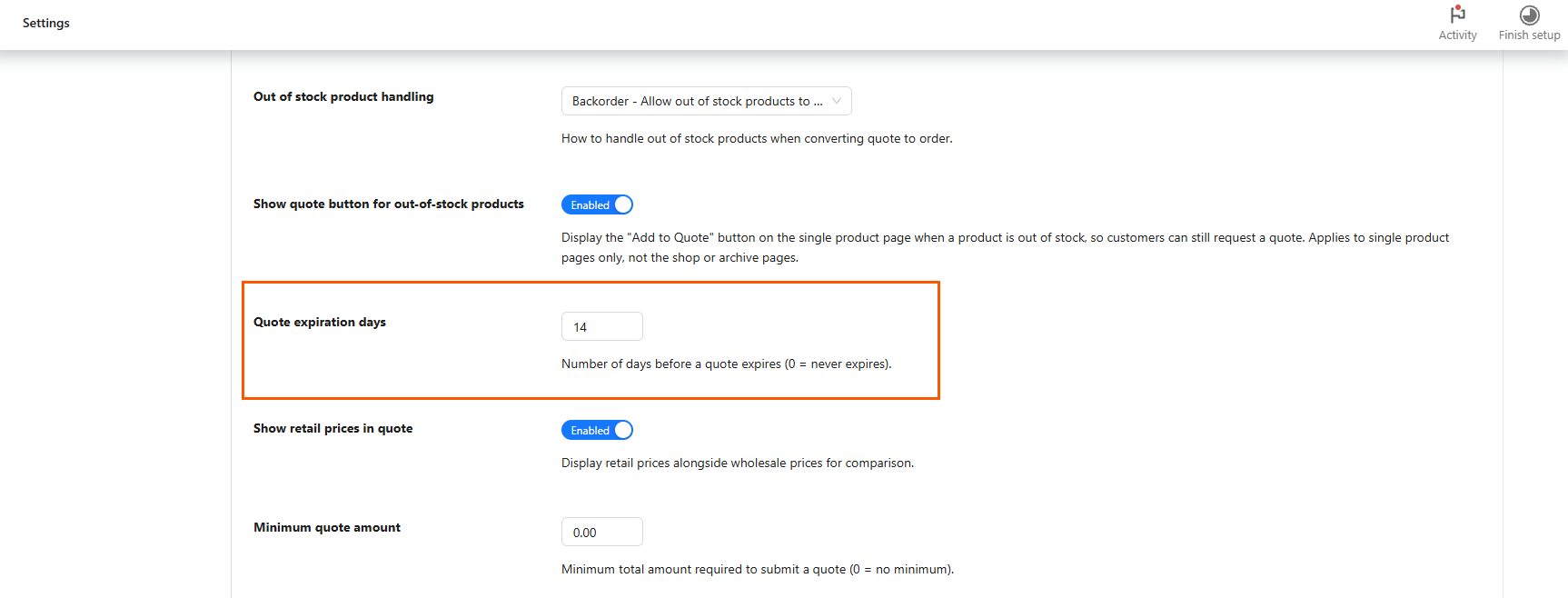
Quote expiry is a setting, not something you apply to each quote by hand. In Wholesale Quotes the default window is 14 days, and you configure it once from the plugin’s settings alongside your other quote and notification rules. The expiry date underpins any workable wholesale quote follow-up routine.
Pick the window from your own buying cycle rather than copying a default. Two weeks suits stores with reasonably stable costs and buyers who decide quickly. Shorten it if you are quoting against volatile material prices, and lengthen it if your buyers run procurement processes that genuinely take a month.
When a quote expires, the system fires an event that developers can hook into, so a store with the appetite for it can trigger its own workflow at that moment. Most stores will not need that, though it is there when the routine gets more sophisticated.
Auto-Cleanup Of Old Quotes
Separately from expiry, old quotes can be cleared out automatically. The default cleanup window is 30 days.
These two settings do different jobs, and it is worth being clear about which is which. Expiry ends the offer. Cleanup removes the record. A store quoting steadily will accumulate hundreds of dead quotes in a year, and cleanup is what stops the quote list from becoming unusable, which is quietly part of good wholesale quote follow-up too.
Think about your own record-keeping needs before shortening the cleanup window. Once a quote is gone, so is its history, and that history often settles a later dispute.
Volume builds faster than most stores expect. The U.S. Census Bureau’s Annual Wholesale Trade Survey records $1.58 trillion in e-commerce sales by durable-goods merchant wholesalers in 2022, up from $1.41 trillion in 2021, and quote requests scale alongside that kind of growth.
What The Customer Actually Sees
Here is the distinction that confuses people most, so it is worth stating plainly. The public quote link does not expire with the quote.
Each quote gets a URL the customer can open without logging in, and that link stays valid until you delete the quote. Quote expiry and link validity are separate, and your wholesale quote follow-up gets easier once you treat them that way.
That behavior is usually what you want. A buyer coming back after the offer lapsed can still see what was discussed, which makes the follow-up conversation smoother than if they hit a dead page. Just do not assume an expired quote is invisible.
What we’ve seen: Store owners assume that setting a 14-day expiry means the customer loses access after 14 days. It does not. The offer lapses, the link keeps working. If you need a quote genuinely out of circulation, deleting it is the action that does that, not letting it expire.
Email notifications sent to the customer include that public link, which makes it a practical follow-up mechanism. You are pointing someone back at a live page rather than asking them to dig an old attachment out of their inbox.
The Audit Trail: Who Changed What, And When
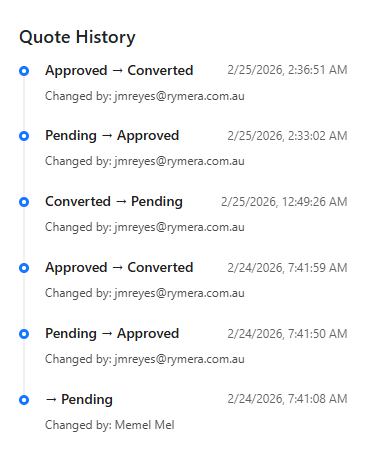
Every status change on a quote is logged with the user who made it, a timestamp, and any notes attached. That log is quiet infrastructure until the day you need it.
This matters more than it sounds. The awkward moment in wholesale is a buyer saying you quoted them less than your records show. Without a log, that becomes a memory contest you will usually lose, because they are certain and you are guessing.
With a status history, you can see exactly when the quote moved from pending to approved, who moved it, and what the figures were at each point. A clear record is part of wholesale quote follow-up that protects you when a price is questioned, and it settles internal questions too once a second person starts handling quotes.
Wholesale Quote Follow-Up Without Being A Nuisance
The plugin will not chase customers for you. The tooling handles the record-keeping, but the wholesale quote follow-up is still a human job, and the aim is to keep it short.
Keep the conversation on the quote itself. Wholesale Quotes includes a messaging thread between you and the customer, with rate limiting on messages, so the negotiation history stays attached to the quote rather than scattered across inboxes. When somebody else picks up the account, everything is in one place.
A cadence that works for most B2B stores: one message a few days after sending, one shortly before the expiry date, and then leave it. Chasing past that point rarely converts and often costs you the relationship, which is the opposite of what good wholesale quote follow-up is for.
A lot is at stake in getting this routine right. Digital Commerce 360 reports U.S. manufacturing and wholesale distribution sales reached $15.12 trillion in 2025, drawn from U.S. Department of Commerce data.
Kalamazoo Industries quotes against machinery configurations where the price depends on the specification, and their setup is a useful illustration of quoting at that level. We covered it in their case study. If you haven’t set up quoting yet, our walkthrough covers how to add Request a Quote to WooCommerce.
Making Wholesale Quote Follow-Up Manageable
Stores that handle wholesale quote follow-up well treat a quote as something with a deadline attached, not a document that sits open indefinitely. That single change removes most of the awkward conversations before they start. Set an expiry window that matches your buying cycle instead of accepting the default, and remember that cleanup and expiry are doing separate jobs: one ends the offer, the other removes the record.
The part that trips people up is access. An expired quote is not a hidden quote, because the public link outlives the offer and keeps working until you delete it. That behavior is usually helpful for the follow-up conversation, as long as you know it is how the system works. And when a price is ever disputed, the status history is what turns a memory contest into a settled fact.
Wholesale quote follow-up gets much easier when the expiry date, customer access, and the record of what changed all live in one system. Wholesale Quotes keeps all three attached to the quote itself, which is what makes the routine something you can actually keep up.
Here’s what we covered in this article:
- Why wholesale quotes go stale
- Setting a quote expiry date
- Auto-cleanup of old quotes
- What the customer actually sees
- The audit trail: who changed what, and when
- Wholesale quote follow-up without being a nuisance
Frequently Asked Questions
Can I change the expiry on a single quote?
The expiry window is configured as a store-wide default. If a specific deal needs a different validity period, state that in the quote message so the terms are explicit and recorded in the thread.
Does the customer get warned before a quote expires?
Not automatically. There is no built-in pre-expiry reminder email, so treat the reminder as part of your own follow-up cadence rather than something the plugin handles.
Can an expired quote be reinstated?
The record and its public link remain until the quote is deleted, so the details are still there to work from, which keeps your wholesale quote follow-up options open. Whether you honor the old price is a commercial decision, not a technical one.
Does the public link stop working when the quote expires?
No. The link stays valid until you delete the quote. Expiry ends the offer, not the customer’s access to the page.
Should I keep quotes forever?
Most stores do not need to. The default 30-day cleanup keeps the list workable. If you need to retain quotes longer, such as for compliance, extend the window before it starts removing anything you need.