
This guide covers the full operational playbook for building a sustainable wholesale business on WooCommerce. You’ll learn how to source sustainably, earn the right certifications, market your practices to B2B buyers, and set up your WooCommerce store to support it all.
Still deciding what to sell? Our list of wholesale business ideas covers trending niches, and our guide to the best wholesale items to sell breaks down product categories, including sustainable ones, with margins and demand trends.
Why Sustainability Matters For Wholesale Brands
Sustainability has moved from a nice-to-have to a purchasing requirement in B2B. Wholesale buyers now make sourcing decisions based on supplier sustainability practices, and the trend is accelerating.
According to Bain & Company’s 2025 research, 49% of companies are already buying more from their more sustainable suppliers, and 26% are actively dropping suppliers that fail to meet their sustainability criteria, a share Bain expects to climb to 49% by 2028. For any sustainable wholesale business selling to retailers, distributors, or institutional buyers, your sustainability credentials directly affect whether you win and keep the account.
The regulatory side is tightening too. The EU’s Corporate Sustainability Reporting Directive (CSRD) now requires large companies to report on their entire value chain, including suppliers. In PwC’s 2024 Global Investor Survey, more than 70% of investors said the companies they invest in should build sustainability directly into their business strategy. Even if your wholesale business isn’t directly subject to these regulations, your buyers may be, and they’ll pass their reporting requirements down to you.
Here’s what’s driving sustainability in wholesale:
Buyer demand
Wholesale buyers increasingly require sustainability documentation before placing orders. They want certifications, sourcing details, and packaging practices. If you can’t provide them, the buyer moves on to a supplier who can.
Retail partner requirements
Major retailers are mandating sustainable sourcing from their wholesale vendors. Target, Walmart, and Whole Foods all run supplier sustainability programs that wholesale brands must comply with to maintain their accounts.
Regulatory trends
The EU CSRD, packaging waste regulations, and expanding carbon reporting requirements are creating new compliance obligations that ripple through supply chains. These rules will only widen in scope over the coming years.
Brand differentiation
In crowded wholesale categories, sustainability credentials create competitive advantage. When two suppliers offer similar products at similar prices, the one with verified eco-credentials wins the order.
We’ve seen that sustainable wholesale businesses that document and communicate their practices clearly get more repeat orders. B2B buyers don’t have time to audit every supplier. When you make your eco-credentials easy to verify, buyers stick with you.
For a broader look at sustainable practices for online businesses, read our guide on sustainability in ecommerce.
Building A Sustainable Wholesale Supply Chain
Your supply chain is where a sustainable wholesale business either proves its claims or falls apart. It doesn’t matter what your website says if your sourcing, packaging, and shipping don’t back it up. Three areas deserve your focus.
Sustainable sourcing and certifications
Certifications are the currency of trust in sustainable wholesale. B2B buyers look for specific third-party validations that prove your products meet real environmental and ethical standards. The certifications that carry the most weight for a sustainable wholesale business depend on your product category, but the most recognized across wholesale include:
- Fair Trade for ethically sourced goods with fair labor practices
- USDA Organic for food, beverages, and agricultural products
- FSC (Forest Stewardship Council) for wood and paper products from responsibly managed forests
- B Corp for businesses meeting high standards across social and environmental performance
- GOTS (Global Organic Textile Standard) for organic textiles and apparel
- OEKO-TEX for textiles tested for harmful substances
- Cradle to Cradle for products designed with material health and circularity in mind
Getting certified takes time and investment, but it pays off in buyer trust and premium pricing power. Start with the certification most relevant to your product category, then expand from there.
When vetting suppliers, go beyond their claims. Request certification documentation, audit reports, and supply chain transparency data. Visit production facilities when you can. Buyers will ask you the same questions about your supply chain, so you need verifiable answers.
Document everything. Build a supply chain map that shows where your materials come from, who processes them, and what certifications apply at each stage. This documentation becomes a sales tool whenever wholesale buyers request sustainability information during the purchasing process.
Eco-friendly packaging options for wholesale shipments
Wholesale packaging operates at a different scale than DTC. You’re dealing with bulk shipments, palletization, and protective materials for large quantities. Sustainable packaging options for wholesale include:
- Recycled cardboard for outer shipping boxes and inner packaging
- Compostable void fill (cornstarch packing peanuts, recycled paper fill) instead of styrofoam
- Paper tape instead of plastic packing tape
- Biodegradable stretch wrap for pallet wrapping
- Reusable shipping containers for repeat buyers on regular schedules
According to Smithers, the global packaging industry was worth $1.23 trillion in 2024, and greater sustainability, driven by recycled materials and fiber-based formats, is now the dominant trend reshaping packaging design. That shift reflects how seriously businesses at every level are taking packaging sustainability.
Some sustainable packaging options cost more per unit than their conventional equivalents. The total cost picture is more nuanced, though. Recycled and compostable materials often reduce waste disposal costs, and many wholesale buyers will pay a small premium for eco-friendly packaging because it supports their own sustainability commitments.
Carbon-neutral or reduced-emission shipping strategies
Shipping is one of the most visible parts of your carbon footprint, and B2B buyers are starting to ask about it. You don’t need to achieve carbon neutrality overnight, but you should have a strategy to reduce emissions and a plan to track your progress.
Consolidate shipments
Fewer, larger shipments produce less per-unit carbon than many small ones. Offer incentives for wholesale buyers who place larger orders on a regular schedule.
Choose carriers with carbon offset programs
UPS, FedEx, and DHL all offer carbon offset or carbon-neutral shipping options. These add a small cost per shipment but give you documented proof of your emission reduction efforts.
Optimize warehouse location
When most of your wholesale buyers are concentrated in specific regions, positioning your warehouse closer reduces shipping distances and emissions. This matters more as your order volume grows.
Track and report
Calculate your shipping carbon footprint per order and per unit. Buyers are starting to request this data, and having it ready shows that you take emissions seriously.
Marketing Sustainability To B2B Buyers
Having sustainable operations is step one. Communicating them effectively to B2B buyers is step two. Unlike consumer marketing, where emotional storytelling drives purchases, B2B sustainability marketing needs to be specific, verifiable, and easy to find.
Highlight certifications on your wholesale registration page
Your wholesale registration page is often the first substantive interaction a potential buyer has with your brand. It’s where they decide whether you’re worth applying to. Display certification badges prominently on this page, and include a brief sustainability statement that buyers see before they submit their application.
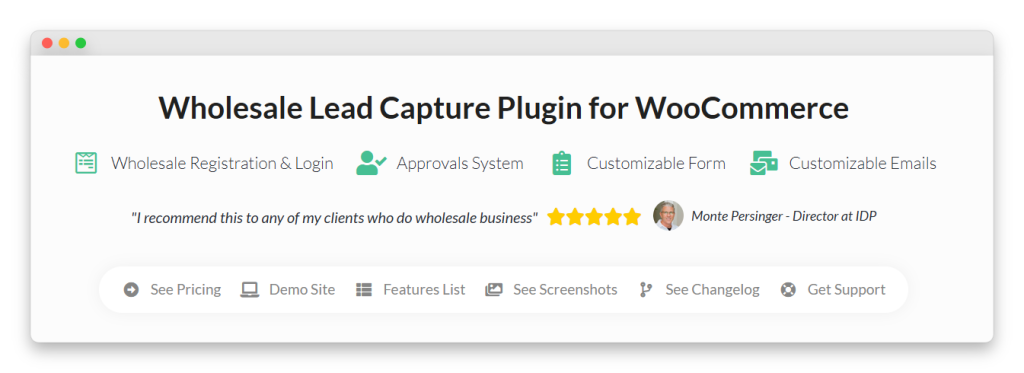
With Wholesale Lead Capture, you can build a custom registration page that carries your sustainability messaging alongside the application form. This sets expectations from the very first touchpoint.
Include sustainability info in your product descriptions
B2B buyers scan product pages for certification info, material sourcing details, and eco-attributes. Don’t bury this information on a separate “sustainability” page that buyers have to hunt for. Include it directly in your product descriptions.
For each product, add relevant sustainability data: materials used, applicable certifications, country of origin, and any per-unit carbon footprint figures you can provide. Use consistent formatting across your catalog so buyers can compare eco-attributes quickly from one product to the next.
Use your wholesale agreement to document sustainability commitments
Your wholesale agreement is more than a sales contract. It’s an opportunity to formally document your sustainability commitments. Include clauses covering your packaging standards, sourcing commitments, and any carbon offset participation.
This protects both parties. Your buyers get written assurance that your sustainability practices will continue, and you get documentation that proves your commitments are real, not just marketing. Sustainability clauses in wholesale agreements also make it harder for competitors to undercut you on price alone, because the buyer has contracted for specific sustainability standards.
Create sustainability reports for wholesale partners
Quarterly or annual sustainability reports build long-term trust with B2B buyers. These don’t need to be glossy 50-page documents. A clear, concise report covering your sourcing changes, packaging improvements, carbon footprint data, and certification updates is enough.
Share reports proactively with your wholesale buyers rather than waiting for them to ask. This positions you as a transparent partner and gives buyers documentation they can fold into their own sustainability reporting.
Setting Up Your Sustainable Wholesale Business On WooCommerce
Your WooCommerce store is where these practices become visible to buyers, and where your sustainable wholesale business comes together. Here’s how to structure your storefront to support and communicate your eco-friendly operations.
Use Lead Capture custom fields to collect buyers’ sustainability requirements
Add custom fields to your wholesale registration form that ask about buyers’ sustainability policies and requirements. For example:
- “Do you require Fair Trade certified products?”
- “What packaging requirements do you have for incoming wholesale shipments?”
- “Do you need sustainability documentation for your supply chain records?”
With Wholesale Lead Capture, you can add custom fields to your registration form to collect this information during the application process. This helps you tailor your service to each buyer’s needs, and it signals that you take sustainability requirements seriously from day one.
Organize eco-friendly products into wholesale categories with Wholesale Prices Premium
Create dedicated product categories for your certified product lines. You might build categories for Organic, Fair Trade, FSC Certified, and Carbon-Neutral products.
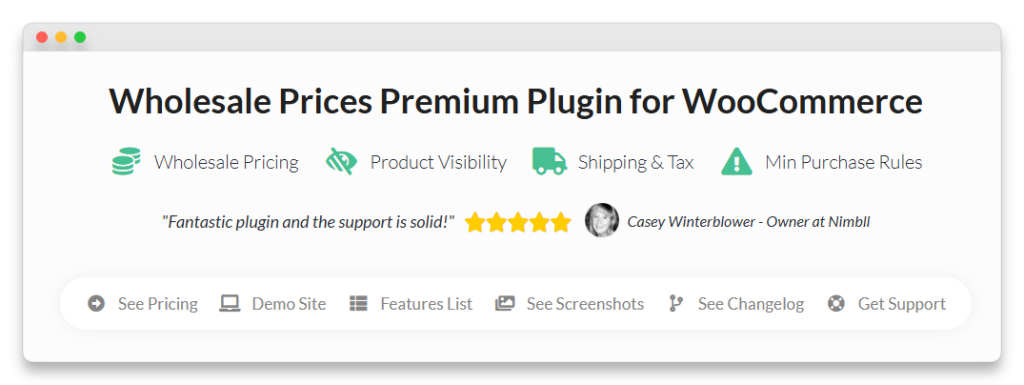
With Wholesale Prices Premium, you can set category-level wholesale pricing, so buyers browsing your sustainable product categories see tiered discounts that reward larger orders. This makes it easy for buyers to find and order exclusively from your sustainable catalog without filtering through your entire product range.
Organized categories also simplify your own inventory management and reporting. You can track which sustainability categories drive the most wholesale revenue and adjust your sourcing strategy accordingly.
Feature sustainability badges and certifications on product pages
Add certification badge images to your product galleries or descriptions. Use consistent badge placement across all products so buyers scanning your catalog can quickly identify which certifications apply to each product.
Include links to certification bodies (Fair Trade USA, FSC, USDA Organic) so buyers can verify your claims independently. This transparency is the opposite of greenwashing, and B2B buyers notice it. When a buyer can click through to the certifying body and confirm your status, your credibility goes up significantly.
Build Your Sustainable Wholesale Business
Building a sustainable wholesale business is a competitive advantage that compounds over time. As more B2B buyers mandate sustainability from suppliers, sustainable wholesale businesses with certifications, documented supply chains, and transparent reporting will win orders competitors lose.
Start with your supply chain, and get the certifications that matter for your product category. Document everything, then build your WooCommerce storefront to communicate those credentials clearly to every wholesale buyer who visits. The brands that treat sustainability as an operational foundation rather than a marketing layer are the ones buyers keep coming back to.
Ready to set up your store? Wholesale Suite bundle gives you wholesale pricing, lead capture, and order management in one package, so you can focus on building the eco-friendly brand your buyers are looking for.
Here’s what we covered in this article:
- Why sustainability matters for wholesale brands
- Building a sustainable wholesale supply chain
- Marketing sustainability to B2B buyers
- Setting up your sustainable wholesale business on WooCommerce
Frequently Asked Questions
What certifications matter most for a sustainable wholesale business?
It depends on your product category. For food and beverages, USDA Organic and Fair Trade carry the most weight. For textiles and apparel, GOTS and OEKO-TEX are standard. For paper and wood products, FSC certification is expected. B Corp certification applies across all industries and signals a broad commitment to social and environmental performance. Start with the certification most relevant to your products, then add more as your business grows.
How do I prove my sustainability claims aren’t greenwashing?
Third-party certifications are the strongest proof. Beyond certifications, publish supply chain documentation, share sustainability reports with buyers, and include links to certifying bodies on your product pages so buyers can verify independently. Greenwashing claims are vague. Legitimate sustainability practices are specific, documented, and verifiable.
Do B2B buyers actually pay more for sustainable products?
In many categories, yes. Bain & Company found that more than 80% of B2B buyers paid a premium on their most recent purchase of a sustainable product. Sustainable products often command premium pricing because certifications create barriers to entry that limit competition. More importantly, B2B buyers increasingly need sustainable suppliers to meet their own ESG commitments and retail partner requirements. The buying decision isn’t only about price. It’s about whether your products help them meet their sustainability obligations.
How much does it cost to get sustainability certifications?
Costs vary significantly. USDA Organic certification for a small operation commonly ranges from a few hundred dollars to around $2,000 annually, plus inspection fees, and the USDA’s Organic Certification Cost Share Program can reimburse up to 75% of eligible costs. Fair Trade certification varies with your product volume. B Corp certification is based on annual revenue and starts at roughly $2,000 per year for smaller companies. Most certifications pay for themselves through premium pricing and access to sustainability-focused buyer networks.
Can I run a sustainable wholesale business on WooCommerce?
Yes. WooCommerce gives you full control over your product catalog, descriptions, and buyer experience. With Wholesale Suite, you can add custom registration fields for sustainability requirements, organize certified products into wholesale categories with tiered pricing, and build a registration page that showcases your eco-credentials. The platform is flexible enough to support whatever sustainability workflow your sustainable wholesale business needs.